Fossil hunting code
Contact details
Written and designed by Roy Shepherd ©2010. Special thanks to my wife Lucinda Shepherd and
friend Robert Randell for their support, and also to the authors whose works have been consulted.

Scotland fossil locations

Suitable for families Suitable for families Permission required Permission required The key is applied to each of the following locations to indicate the type of terrain and the potential volume of fossils you may encounter. Please note, the volume of finds may vary considerably at different times of the year and depending on prevailing weather conditions. These summaries are produced from recent visits and are updated on a frequent basis.
Quarry location Quarry location High find frequency High find frequency
Beach location Beach location Average find frequency Average find frequency
Countryside location Countryside location Low find frequency Low find frequency


Click to view details Bearreraig Bay (Isle of Skye) Jurassic

Summary: Bearreraig Bay is probably the best place in Scotland to find fossils in abundance. The breathtaking scenery and towering cliffs, make this location worth a visit.

Fossils: ammonites, bivalves, belemnites, crinoids...

Click here to view details
Beach locationAverage find frequency

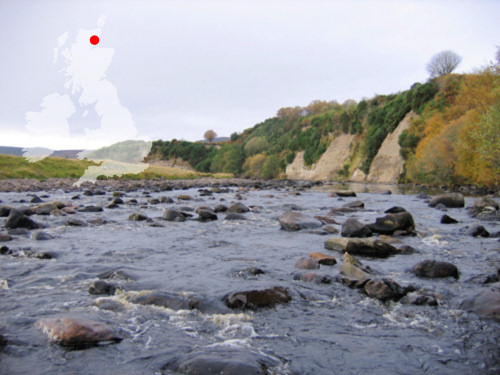
Click to view details River Brora (Sutherland) Jurassic

Summary: The River Brora provides an isolated exposure of Jurassic rock along its banks, approximately one mile inland from the river mouth. Accessibility is dependent on the prevailing weather conditions; viewing or collecting fossils can be difficult and potentially dangerous at times.

Fossils: ammonites, bivalves, belemnites...

Click here to view details
Countryside locationAverage find frequency

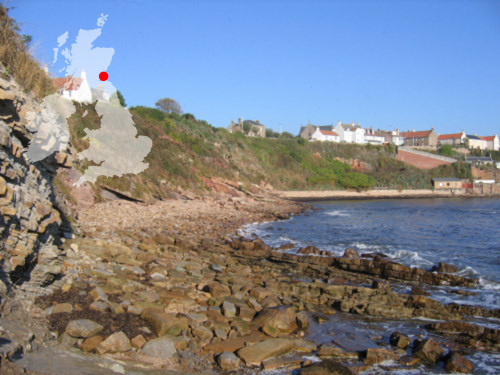
Click to view details Crail (Fife) Carboniferous

Summary: Crail is a small fishing village located in south east Fife (Scotland) and provides a fascinating insight into the Carboniferous period 335 million years ago. What distinguishes Crail from the surrounding localities is the occurrence of several well preserved Arthropleura (giant centipede) trackways.

Fossils: Arthropleura tracks, plant and tree remains, bivalves...

Click here to view details
Suitable for familiesBeach locationAverage find frequency

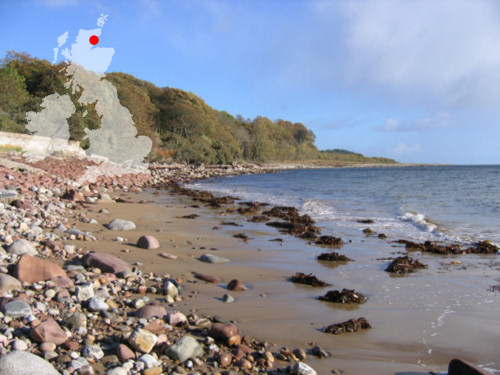
Click to view details Dunrobin (Sutherland) Jurassic

Summary: Dunrobin is better known for its fairy-tail style castle 'Dunrobin Castle' than its fossils, which in comparison are small in size and number; however experienced visitors should be able to locate a range of specimens from the Jurassic rocks.

Fossils: Bivalves, crinoids, ammonites, belemnites...

Click here to view details
Suitable for familiesBeach locationLow find frequency

Click to view details East Wemyss (Fife) Carboniferous

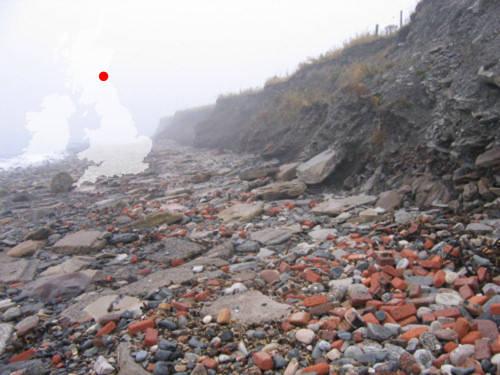
Summary: Despite having little in the way of natural beauty, the foreshore boulders provide an opportunity to observe a number of carboniferous fossils, in particular sections of Stigmaria (Lepidodendron tree roots). For the reasons described, East Wemyss is best suited for individual fossil collectors rather than families.

Fossils: Plant remains...

Click here to view details
Beach locationLow find frequency

Click to view details Kings Barns (Fife) Carboniferous

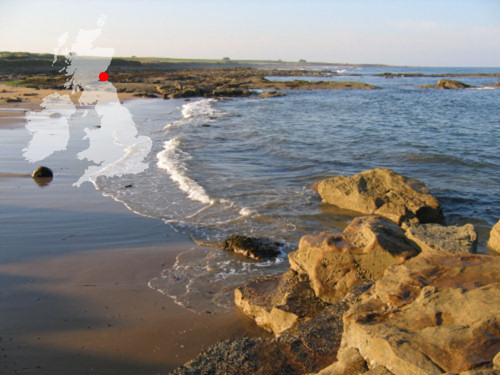
Summary: Kingsbarns is located on the east coast of Fife in Scotland and provides an opportunity to find plant remains dating from the Carboniferous period. At low-tide the roots of the Lepidodendron tree (Stigmaria) which once grew commonly in this part of the world, can be found.

Fossils: Plant remains...

Click here to view details
Suitable for familiesBeach locationLow find frequency


A Discovering Fossils advertisement

VISIT JUNIOR GEO
Advertisement

VISIT FOSSILS DIRECT
Advertisement

VISIT UKGE
Advertisement