

Established 2002
Contact details

Follow us on:

Written and designed by Roy Shepherd. Special
thanks to my wonderful wife
Lucinda Shepherd, friend Robert Randell and various experts for their support.
Eastern England Fossil Locations
Lucinda Shepherd, friend Robert Randell and various experts for their support.
Eastern England Fossil Locations
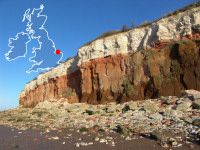 |
Hunstanton (Norfolk) | Cretaceous |
Summary: Hunstanton is one of the best locations in Norfolk to find fossils. The cliffs are simply spectacular and promise a good range of fossils. The best time of year to visit is the winter or after periods of heavy rain/seas, when the rate of erosion is at its greatest.Fossils: ammonites, bivalves, belemnites, echinoids, sponges, shark teeth... |
||
| Click here to view details |
|
|
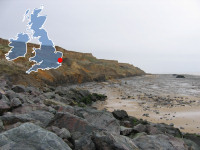 |
Walton-on-the-Naze (Essex) | Eocene and Pliocene |
Summary: Walton-on-the-Naze is a surprisingly good place to find a range of fossils. The presence of both London Clay and the much younger Red Crag provides a diversity of fossils within a short stretch of beach.Fossils: bivalves, shark teeth, wood... |
||
| Click here to view details |
|
|


ADVERTISEMENT BY UKGE - OFFICIAL ADVERTISING PARTNER OF DISCOVERING FOSSILS


ADVERTISEMENT BY UKGE - OFFICIAL ADVERTISING PARTNER OF DISCOVERING
FOSSILS
Join us on a fossil hunt
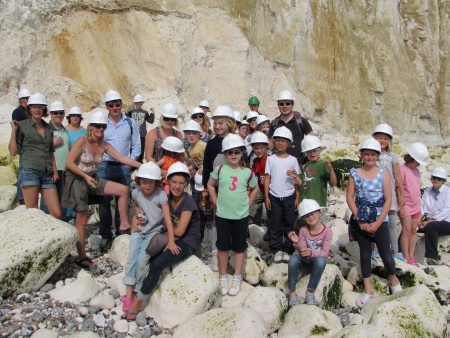
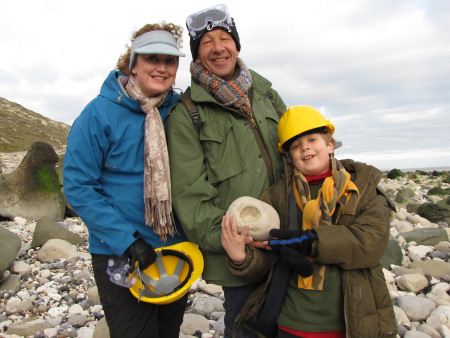
Left: A birthday party with
a twist - fossil hunting at
Peacehaven.
Right: A family hold their prized ammonite at Beachy Head.
Discovering Fossils guided fossil hunts reveal evidence of life that existed millions of years ago. Whether it's your first time fossil hunting or you're looking to expand your subject knowledge, our fossil hunts provide an enjoyable and educational experience for all. To find out more CLICK HERE



