
Introduction
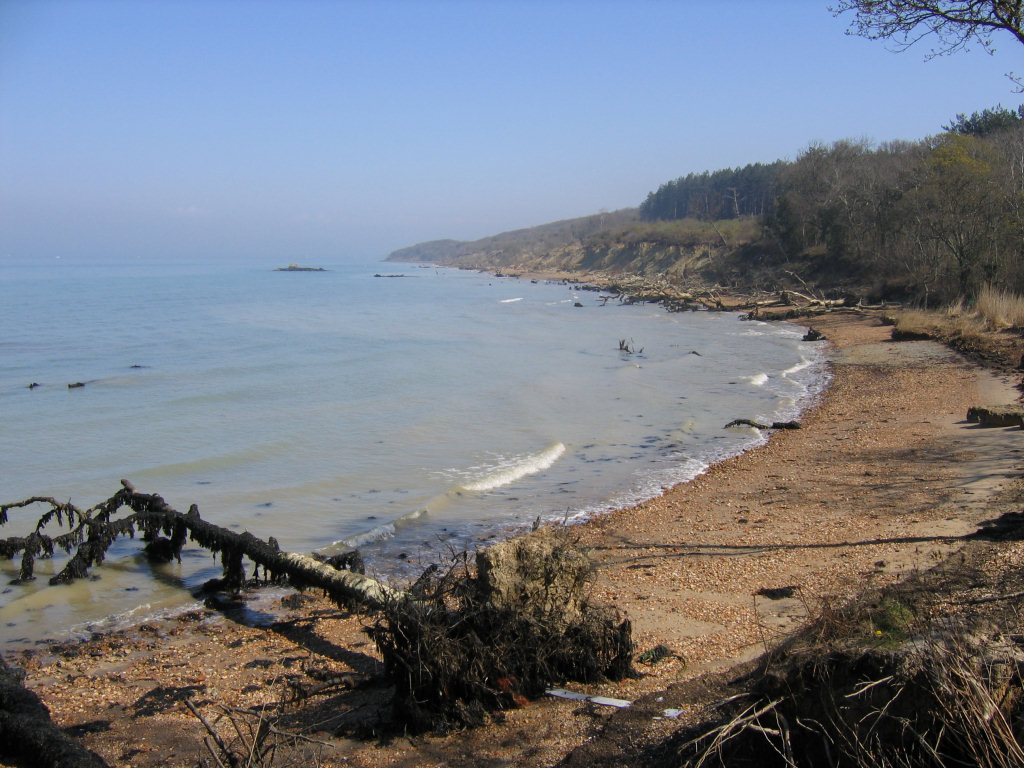
The coast between Bouldnor and Cranmore stretches along the top-left corner of the Isle of Wight and is frequently visited by those interested in the geology of the area; as a result over collecting often occurs, which makes finding good specimens during the summer months more of a challenge. The best time to visit is following periods of stormy weather or during the winter, when the foreshore has been disturbed and new fossils exposed. Visiting on a low or retreating tide is recommended as the majority of finds are made among the pebbles on the foreshore.
The following page is based on the coast between Bouldnor and Cranmore (a future visit is being considered to examine the continuation of the coast towards Hamstead).
Access to the beach is made along Cranmore Avenue, at the top of which a limited amount of parking space is available. Continue on foot along Sea View Road towards the coast until you reach a large private residence. Alongside the seaward edge of the property is a public footpath leading directly to the beach; please note, during or after periods of wet weather the path becomes extremely muddy!
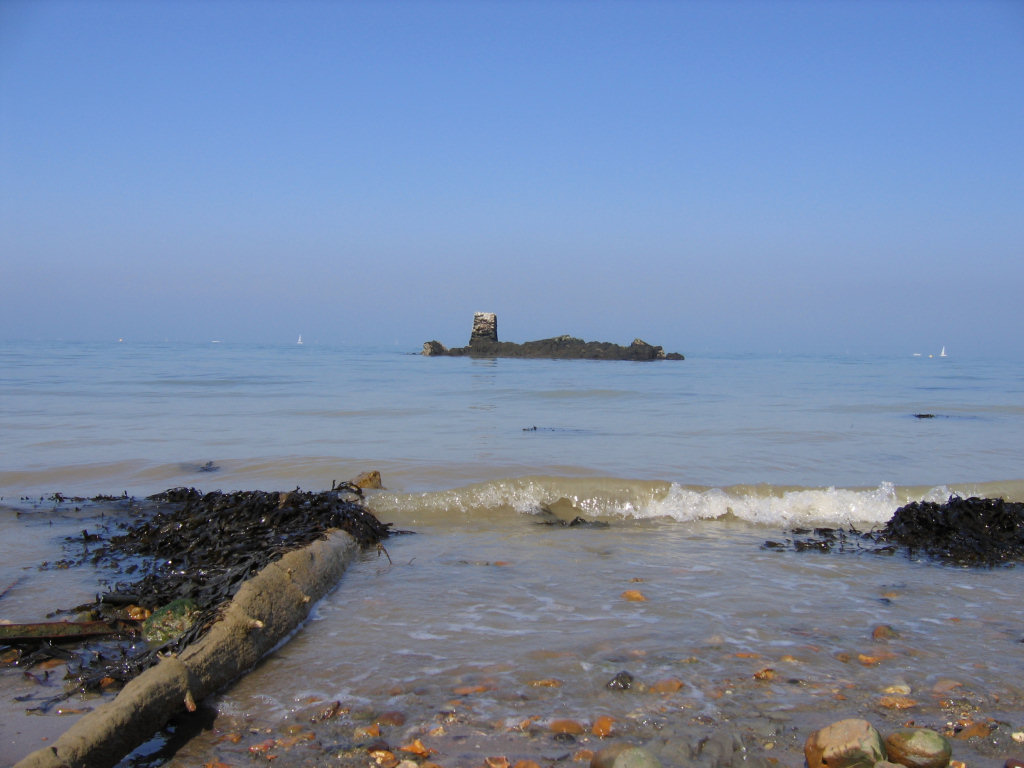
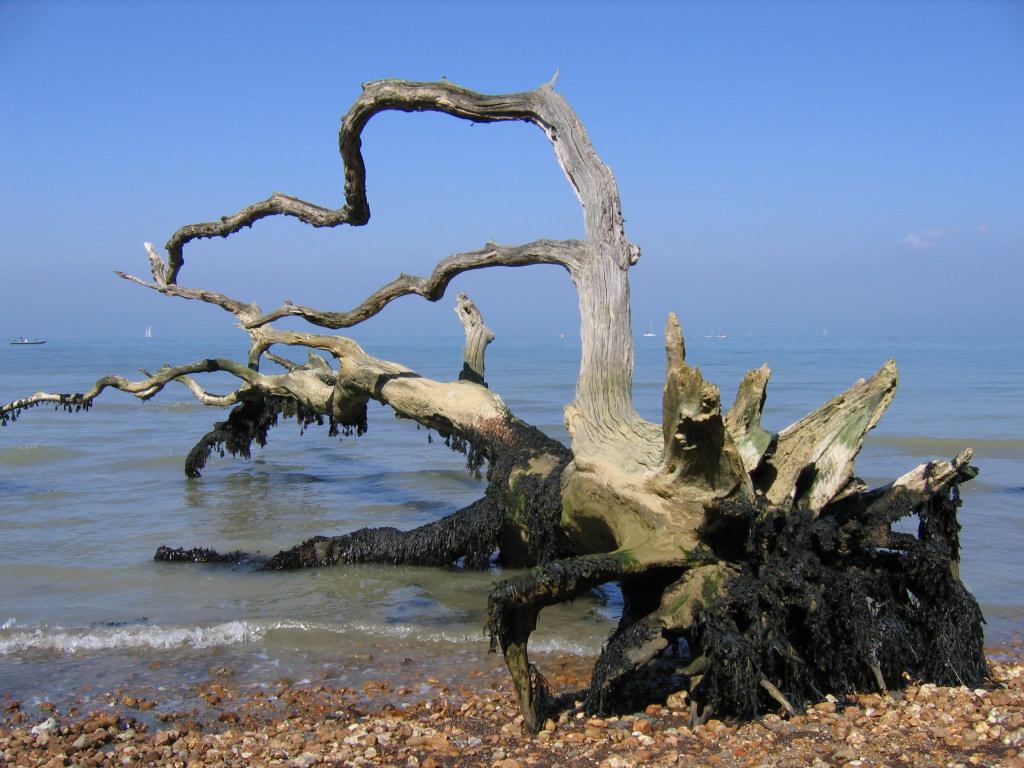
One of the notable environmental processes at Bouldnor is the rate of erosion, evident by the large number of trees and buildings littering the foreshore or surrounded by water! This occurs throughout the year and particularly during the winter, as the waves batter the soft clay cliffs. Some of the marooned features include a large building (see photo below-left), which in the spring of 2007 appeared to be approximately 80 meters off the high water mark!
The geology of Bouldnor to Cranmore
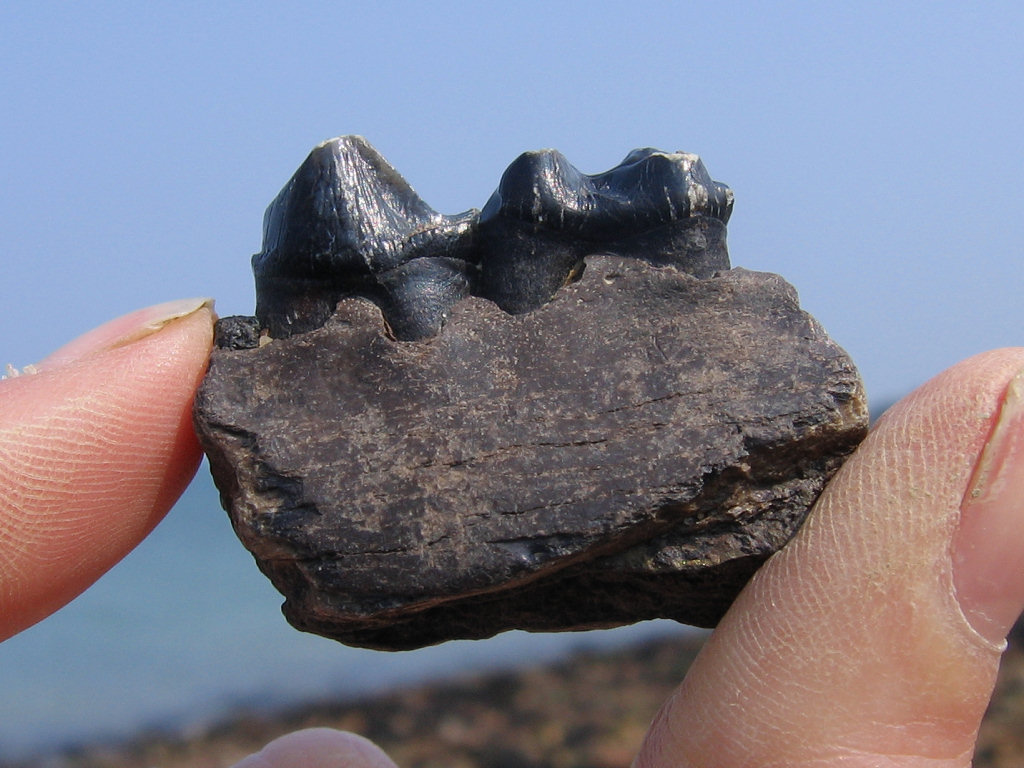
B.Daley and P.Balson, British Tertiary Stratigraphy 1999, describe the environment during this period as a sluggish fluvial / estuary / lagoonal complex occasionally subject to marine inundation. During this time a variety of mammals including Entelodon (pig-like animal), Bothriodon and Brachyodus (grazers), and Caenotherium (small and deer-like) grazed the land close to the water; carnivores including Hyaenodon are also known to have hunted these areas.
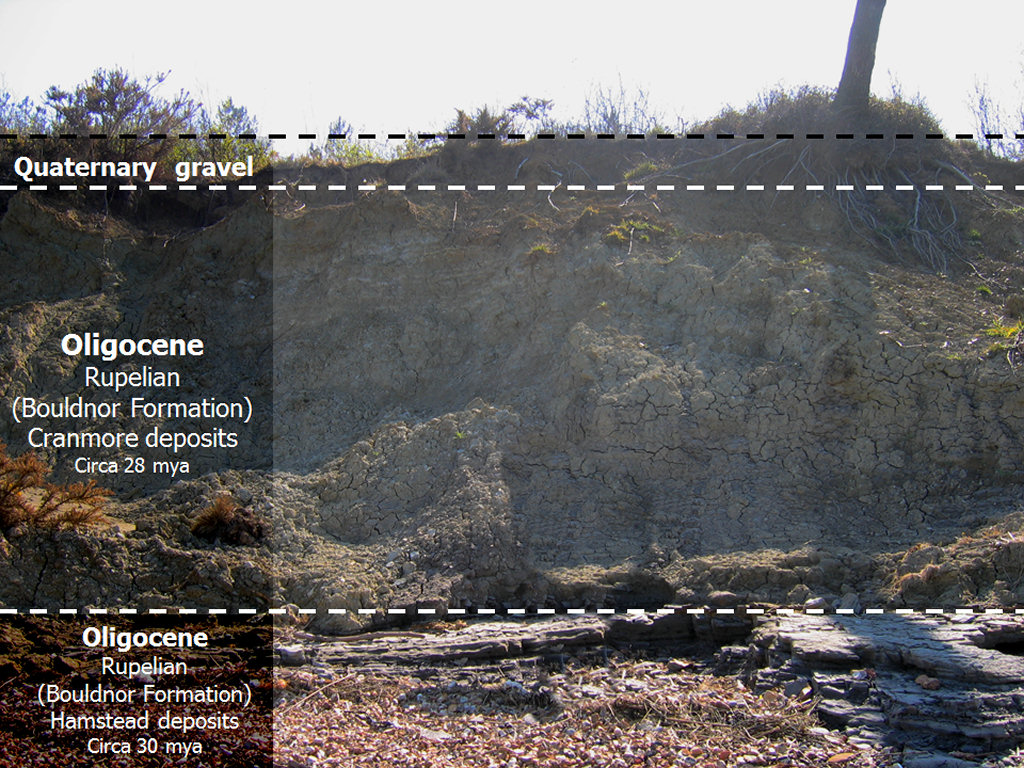
This stretch of coast is the only site with a more or less complete succession of the Bouldnor Formation and the only place where the Hamstead and Cranmore Members are exposed. Despite being heavily overgrown and reliant on very low tides, this is one of the best locations for evidence of sediments formed through periods of change, notably freshwater and brackish (semi-salty) environments, and low wave energy.
Where to look for fossils?
From the beach access point (described) fossils can be found in either direction. Moving westward along the beach, the volume of finds steadily increases for around half a mile, before reducing again (reflecting the reducing exposures of the Hamstead Formation); very few fossils were found beyond the point indicated in the photo below. In reality, this stretch of coast is constantly changing, meaning a recently poor collecting area may become productive soon after.
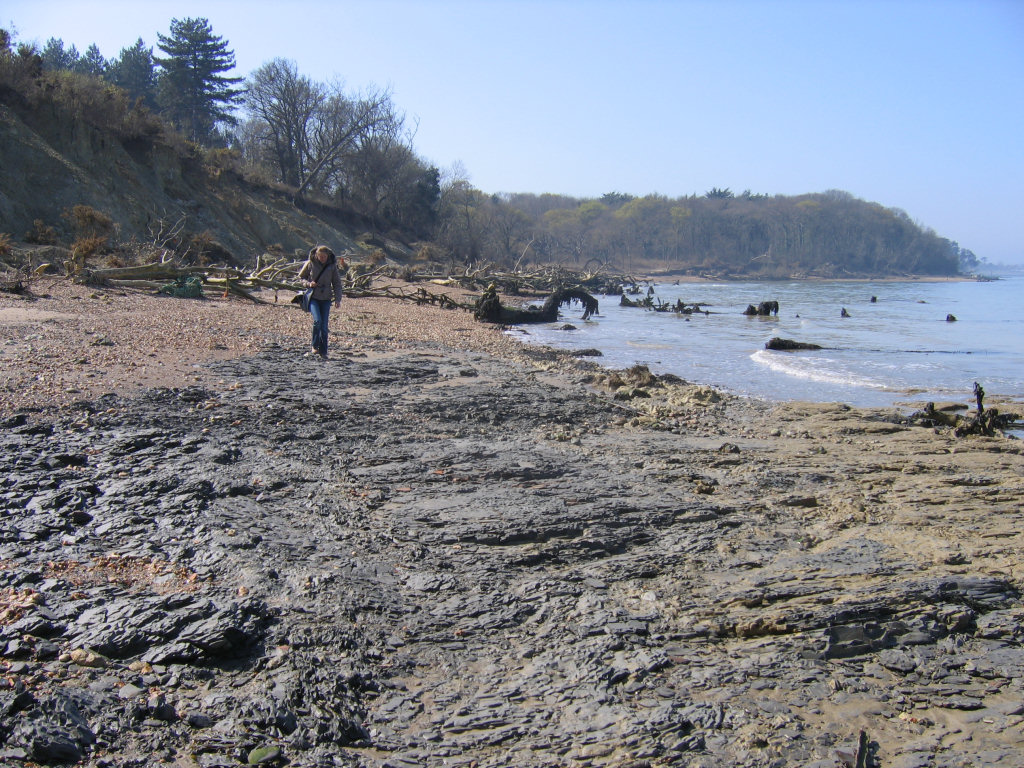
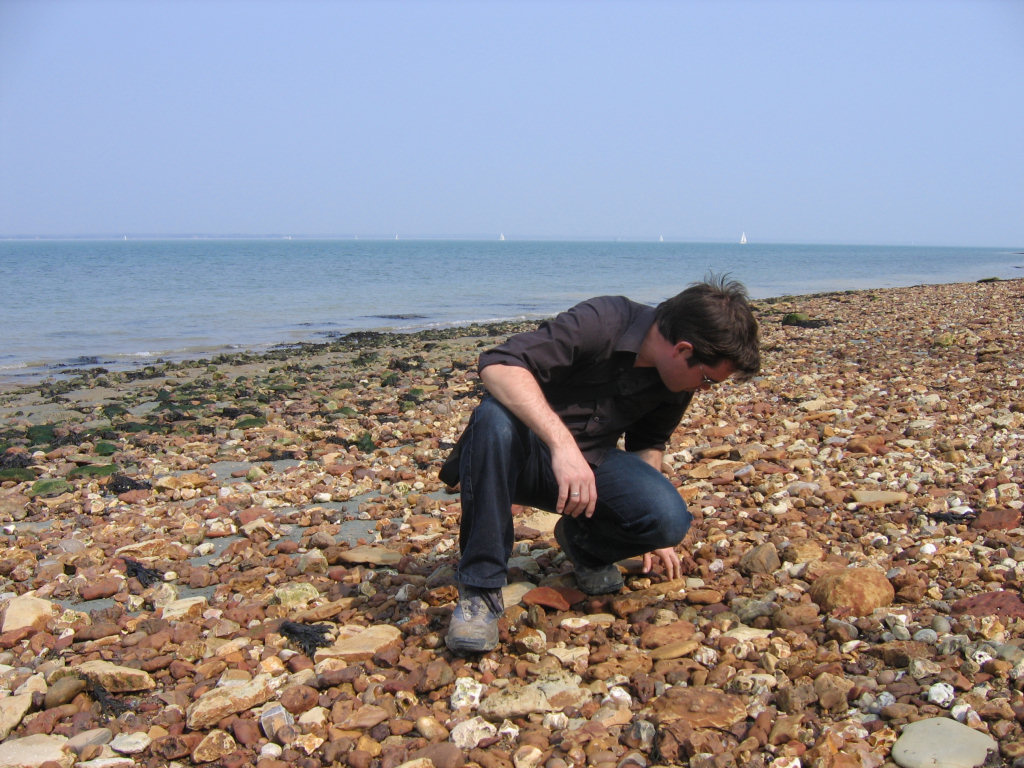
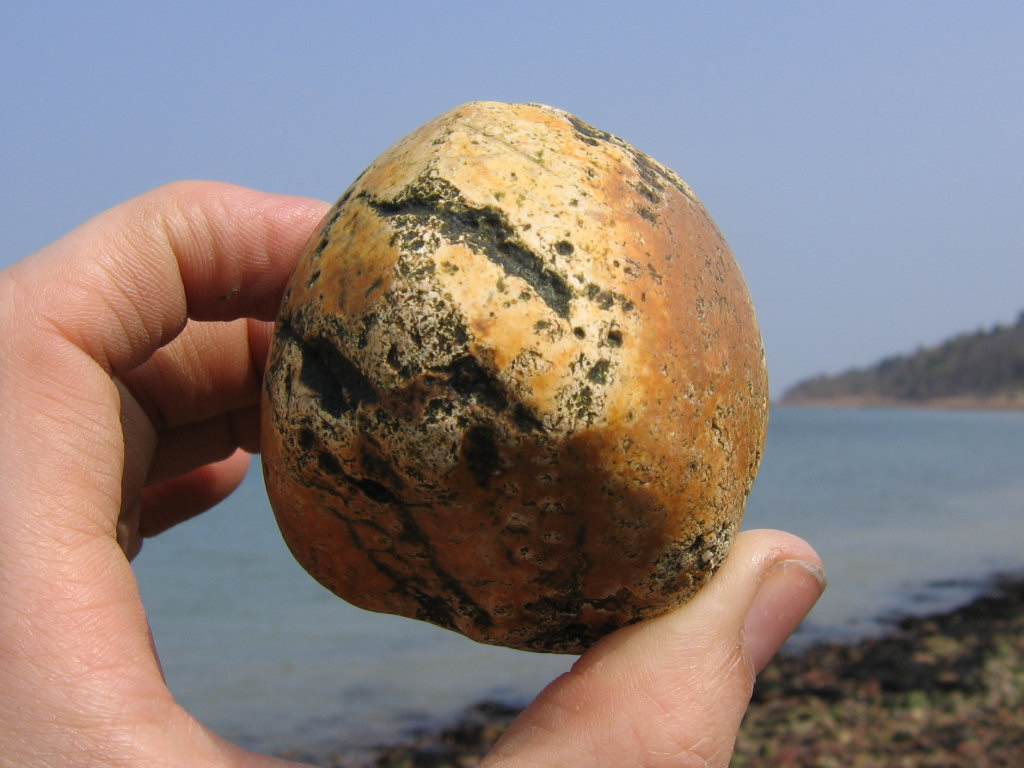
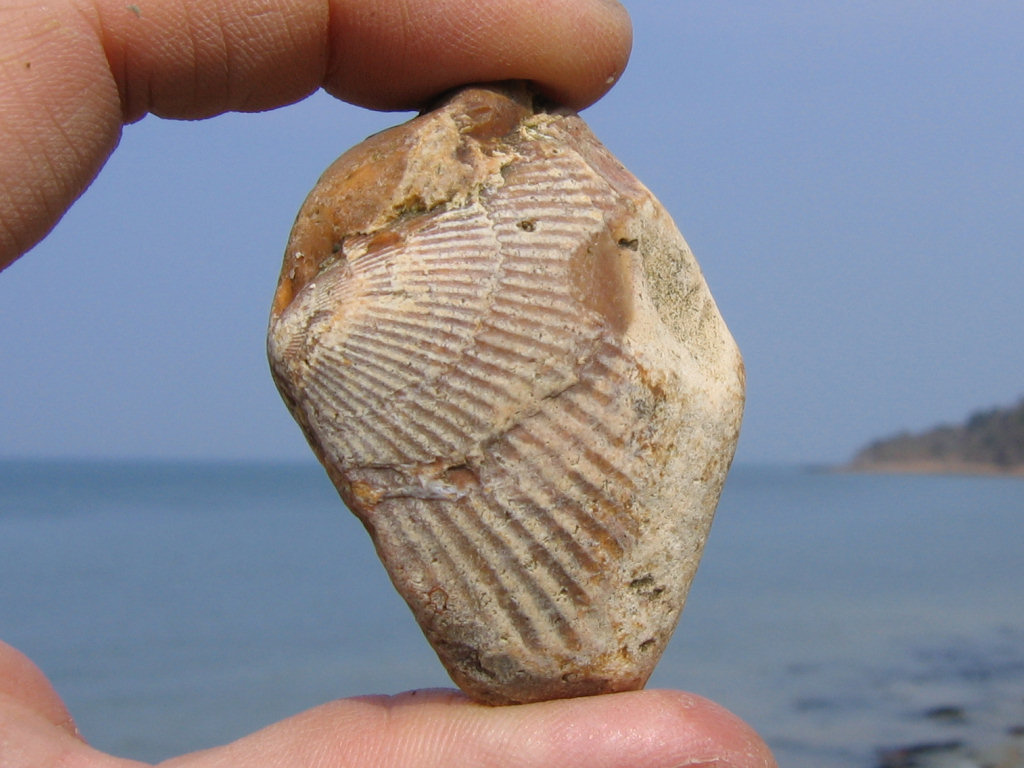
Fossils can be found in situ within the clay and within/among the flint pebbles on the foreshore. Whilst collecting from the clay provides the best opportunity to examine largely intact fossils, the vast majority of finds are made among the pebbles, some of which were of excellent quality (especially mammalian and reptilian). Whilst searching among the pebbles it’s also worth keeping an eye out for flint fossils, these are much older (circa 85 million years old) than the local fossils and were sourced from chalk and transported to the area by glaciers during the last ice-age.
As with all coastal locations, a fossil hunting trip is best timed to coincide with a falling or low-tide. For a relatively low one-off cost we recommend the use of Neptune Tides software, which provides future tidal information around the UK click here. Alternatively a free short range forecast covering the next 7 days is available on the BBC website click here.
What fossils might you find?
The fossils range from very large sections of tree trunks to tiny gastropods and can be found all year round, although in varying volume depending of the prevailing conditions (as outlined above). The following photos illustrate the range of common finds, all of which were found during a single four hour visit.
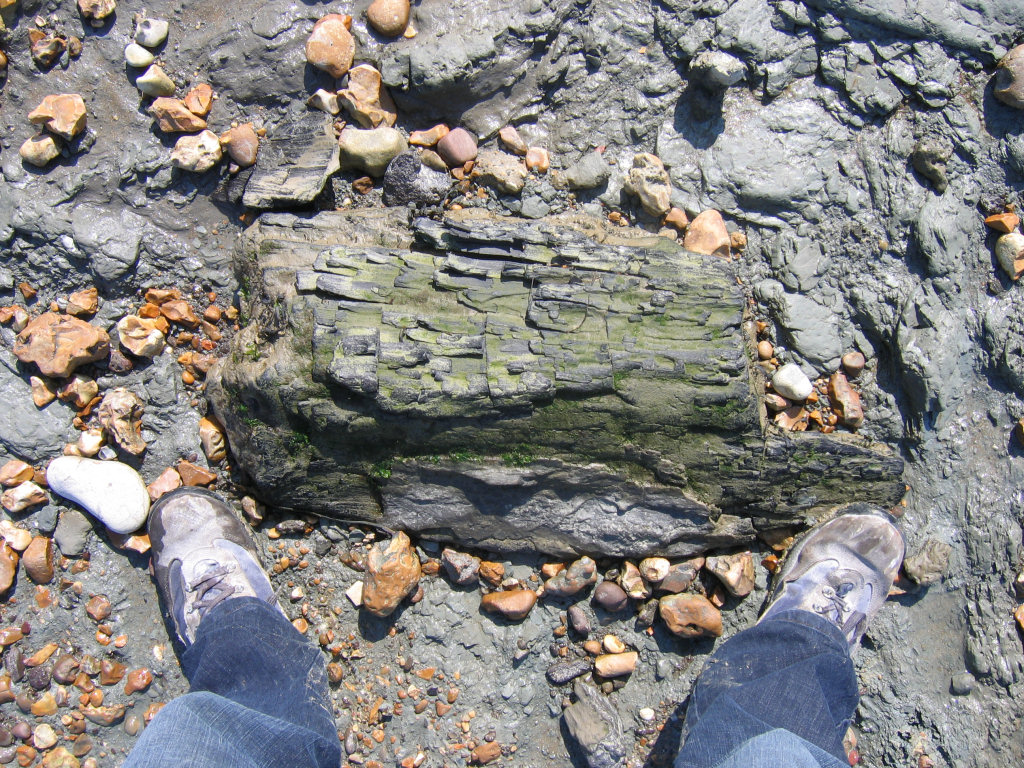
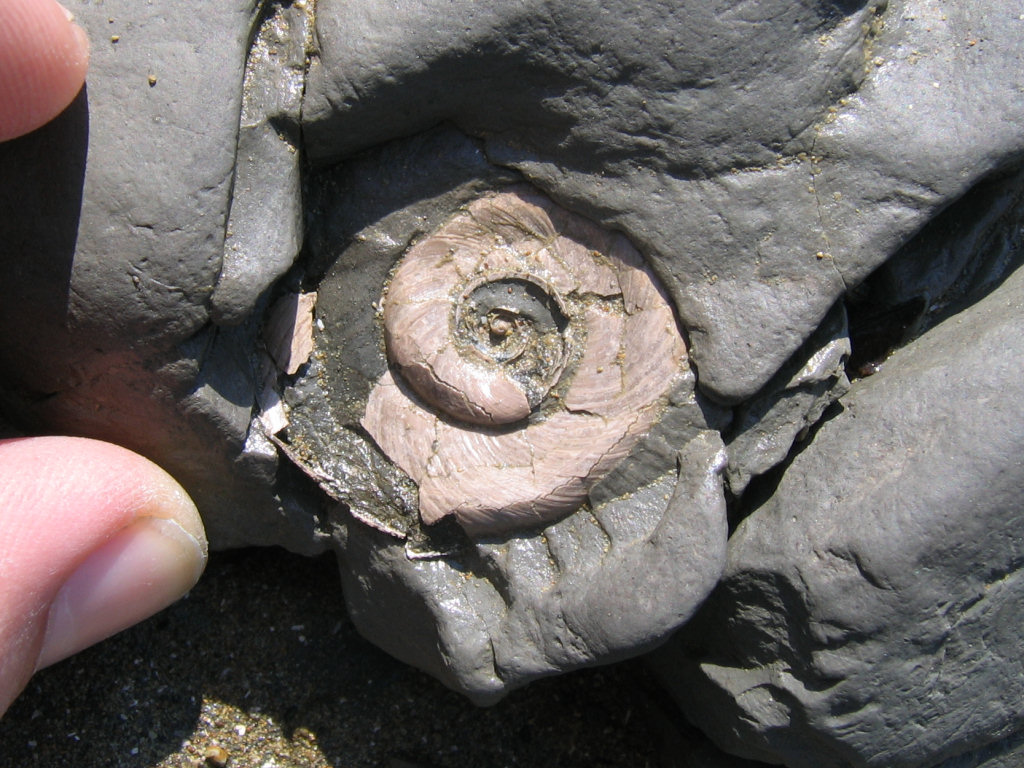
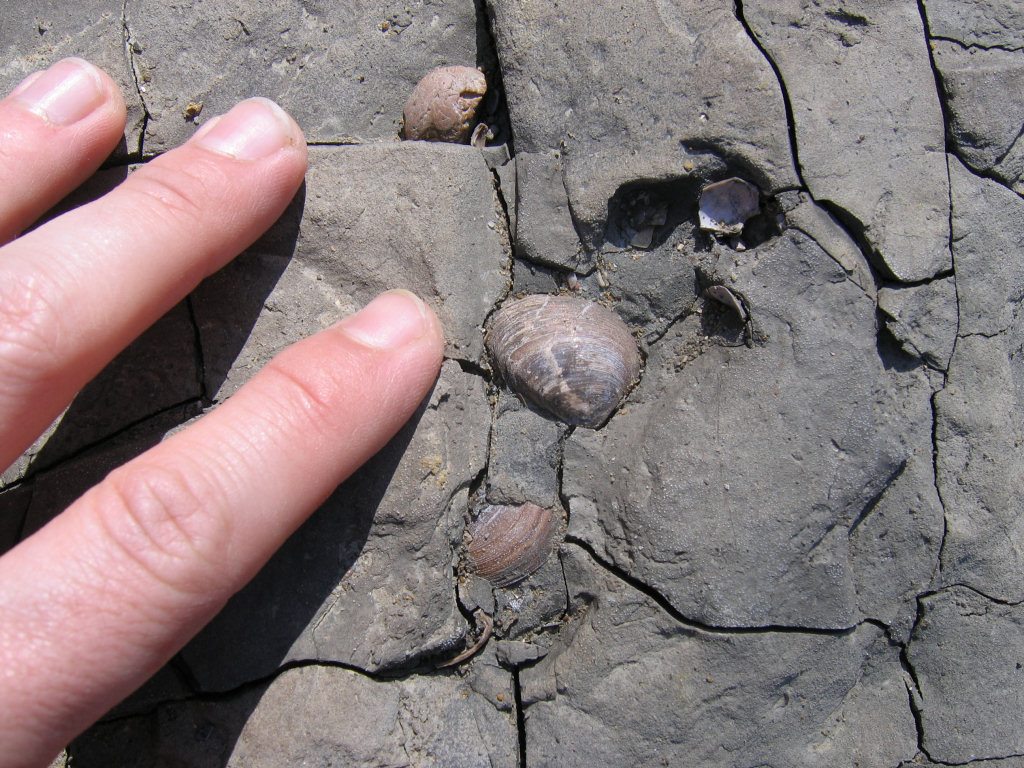
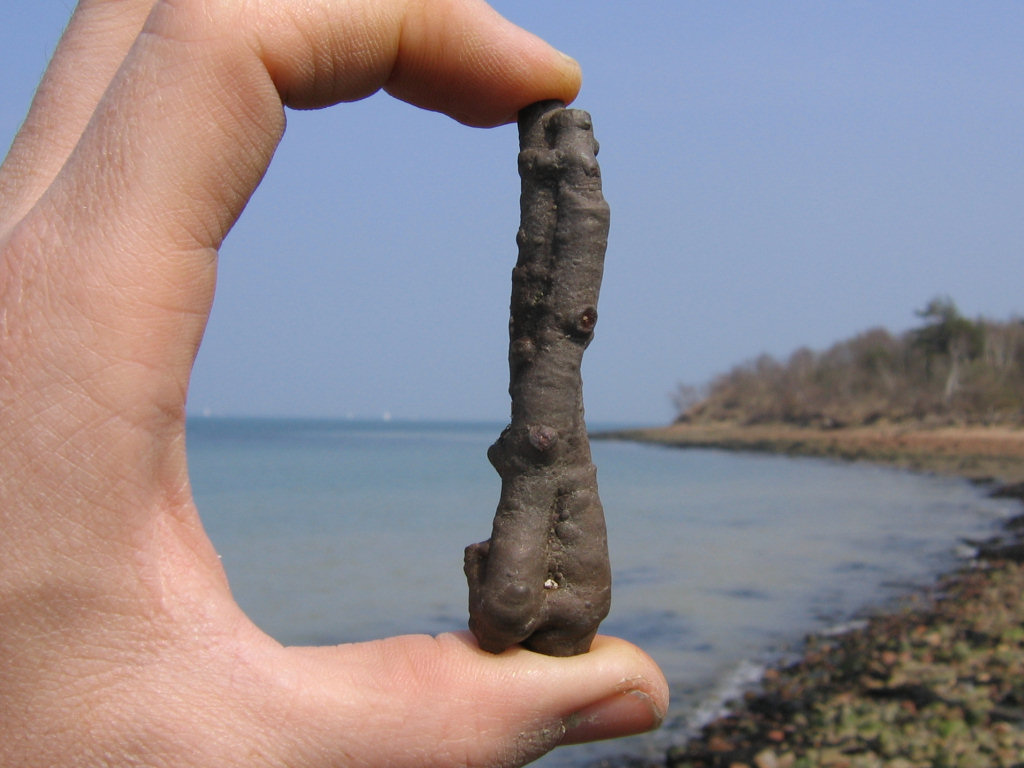
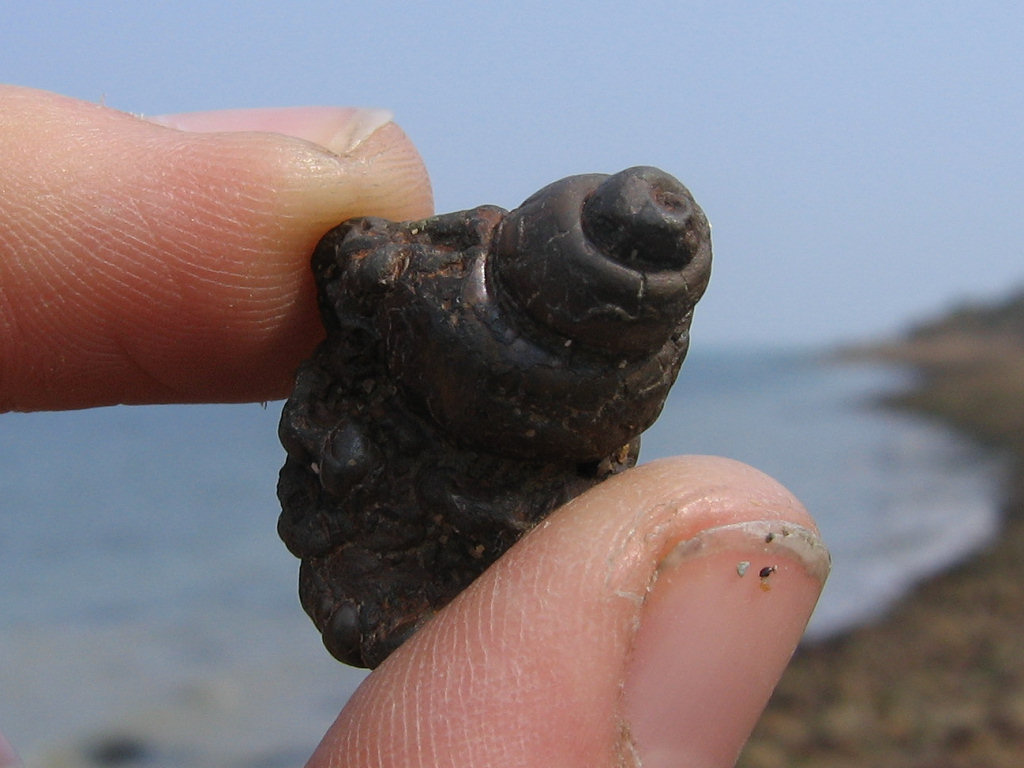
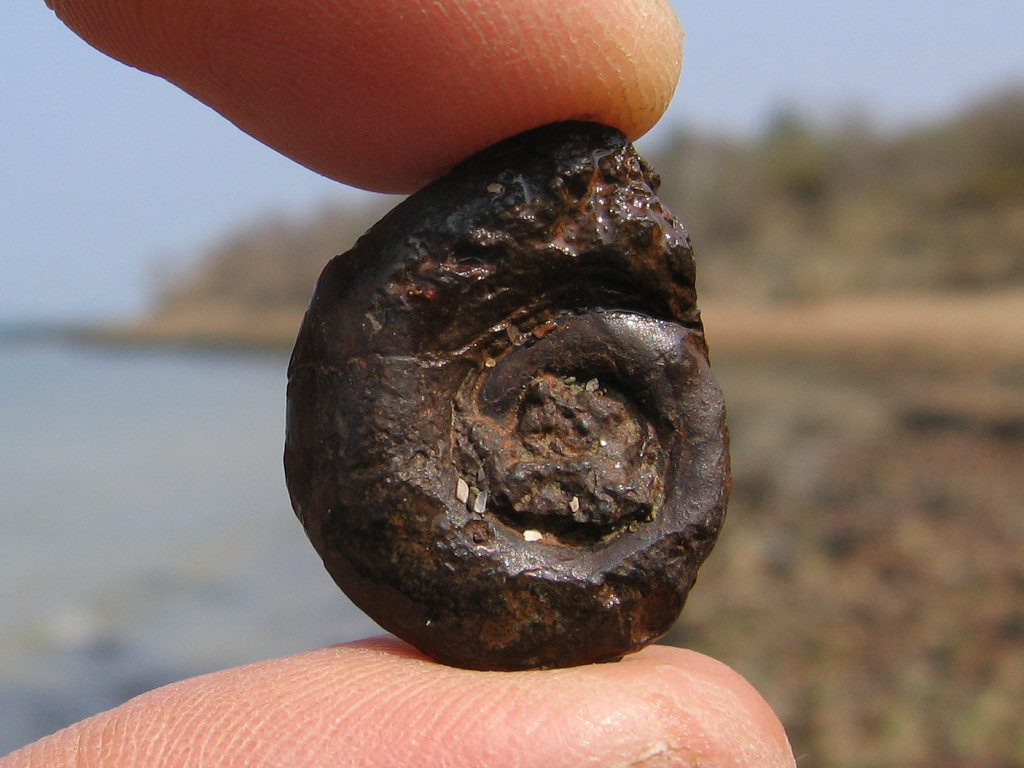
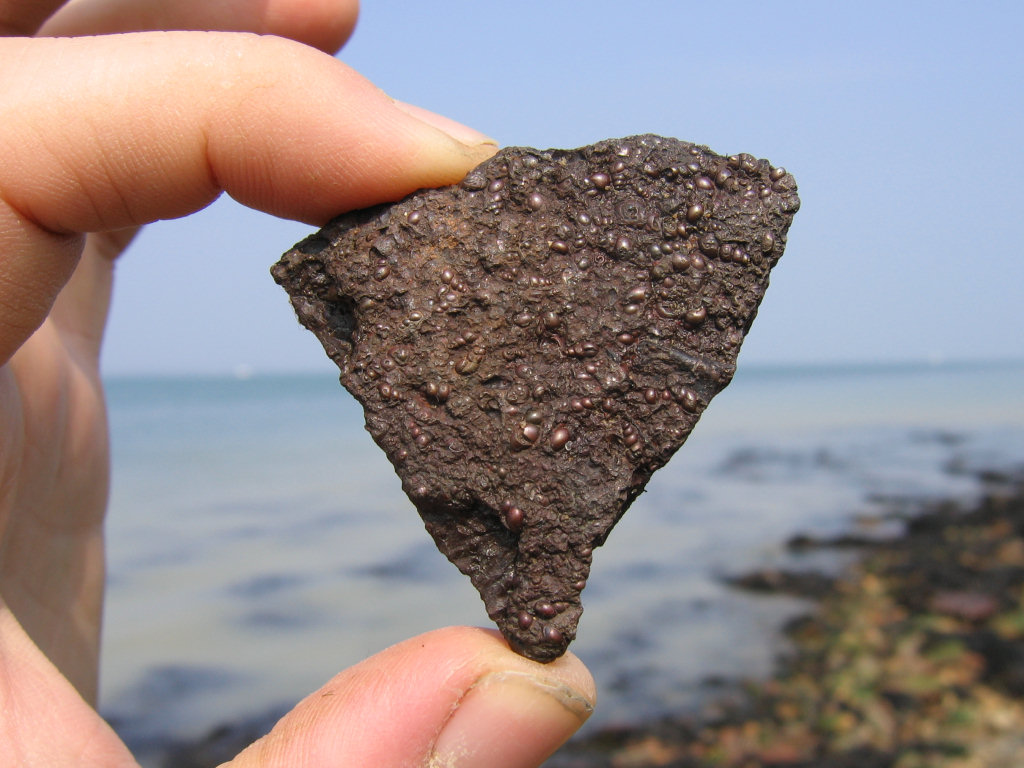
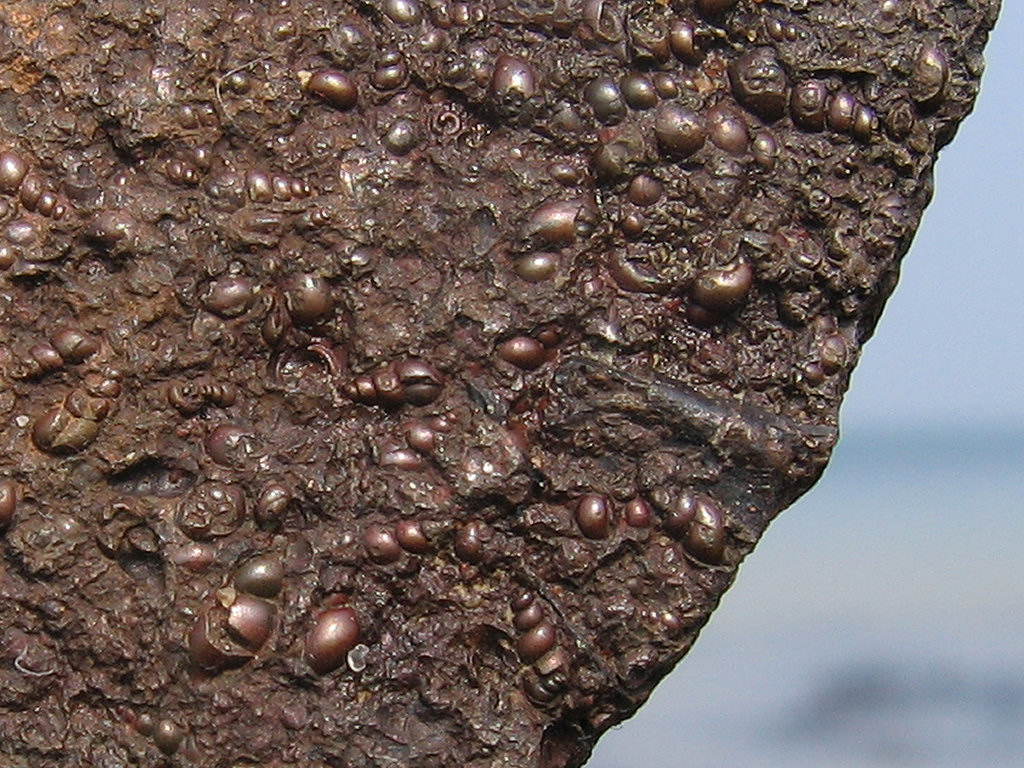
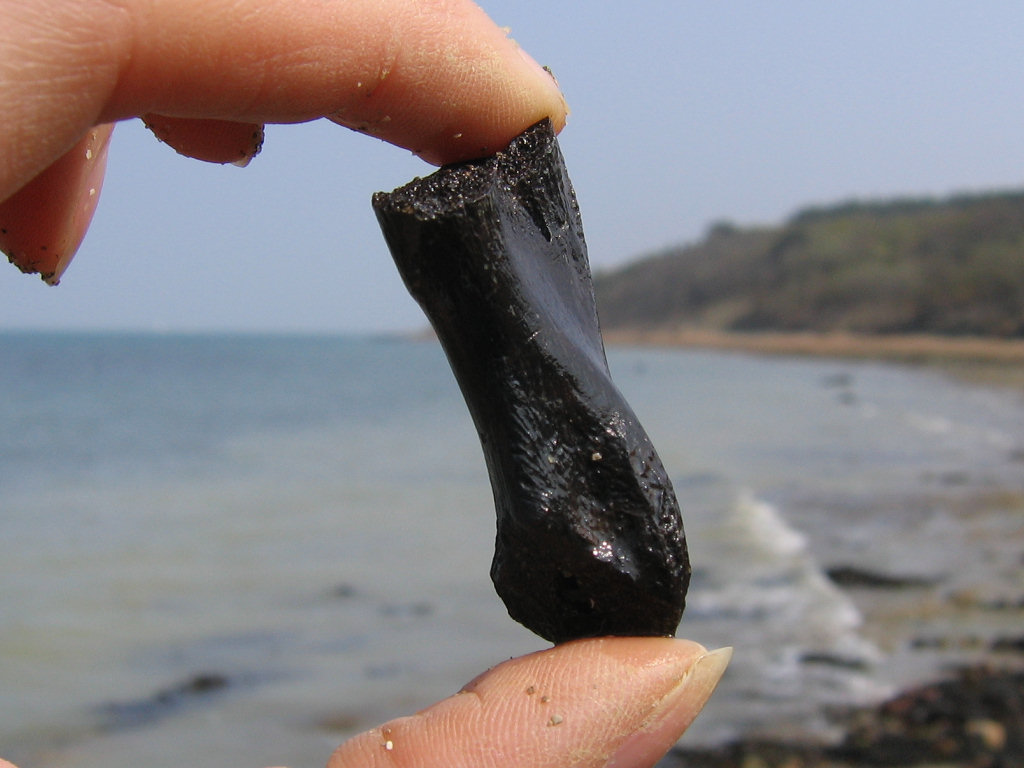
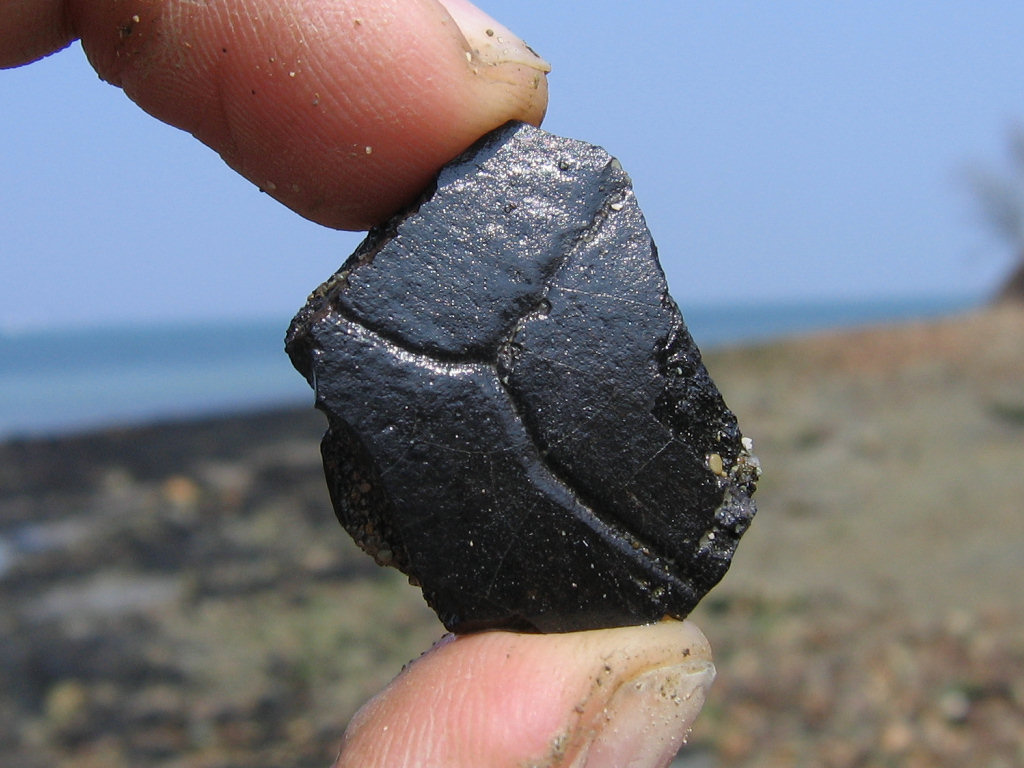
The pebble foreshore also provides an opportunity to search for much earlier fossils dating from the Cretaceous period, perhaps at much as 85 million years ago. These flint pebbles were most probably sourced from neighbouring chalk bedrock and transported to the area by tidal currents or former ice-sheets. Among these flint pebbles are a variety of marine fossils, including echinoids and bivalve shells in particular. See Seven Sisters for more information.
Tools & equipment
It’s a good idea to spend some time considering the tools and equipment you’re likely to require while fossil hunting at Bouldnor. Preparation in advance will help ensure your visit is productive and safe. Below are some of the items you should consider carrying with you. You can purchase a selection of geological tools and equipment online from UKGE.
Steel point: In some instances it’s not necessary to use a hammer and chisel to remove the matrix surrounding the fossil. Sometimes all that’s required is some careful precision work using a steel point. This is particularly relevant with crumbly matrix, where chiselling may otherwise shatter a fragile fossil.
Hand lens: A hand lens enables the fossil hunter to enjoy the finer details of the specimens they find. It’s often remarkable how well preserved some of the most intricate structures can be. We recommend a lens with x10 magnification that folds away into a metal casing to protect it from damage.
Strong bag: When considering the type of bag to use it’s worth setting aside one that will only be used for fossil hunting, rocks are usually dusty or muddy and will make a mess of anything they come in contact with. The bag will also need to carry a range of accessories which need to be easily accessible. Among the features recommended include: brightly coloured, a strong holder construction, back support, strong straps, plenty of easily accessible pockets and a rain cover.
Walking boots: A good pair of walking boots will protect you from ankle sprains, provide more grip on slippery surfaces and keep you dry in wet conditions. During your fossil hunt you’re likely to encounter a variety of terrains so footwear needs to be designed for a range of conditions.
For more information and examples of tools and equipment recommended for fossil hunting click here or shop online at UKGE.
Protecting your finds
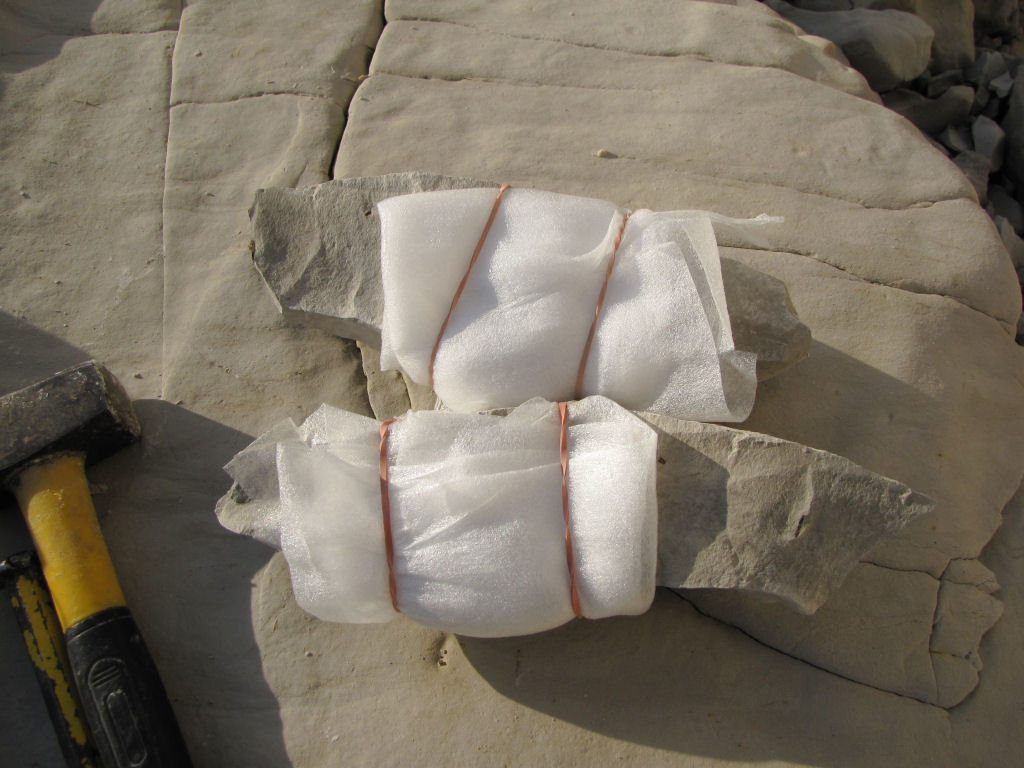
It’s important to spend some time considering the best way to protect your finds onsite, in transit, on display and in storage. Prior to your visit, consider the equipment and accessories you’re likely to need, as these will differ depending on the type of rock, terrain and prevailing weather conditions.
When you discover a fossil, examine the surrounding matrix (rock) and consider how best to remove the specimen without breaking it; patience and consideration are key. The aim of extraction is to remove the specimen with some of the matrix attached, as this will provide added protection during transit and future handling; sometimes breaks are unavoidable, but with care you should be able to extract most specimens intact. In the event of breakage, carefully gather all the pieces together, as in most cases repairs can be made at a later time.
For more information about collecting fossils please refer to the following online guides: Fossil Hunting and Conserving Prehistoric Evidence.
Join us on a fossil hunt
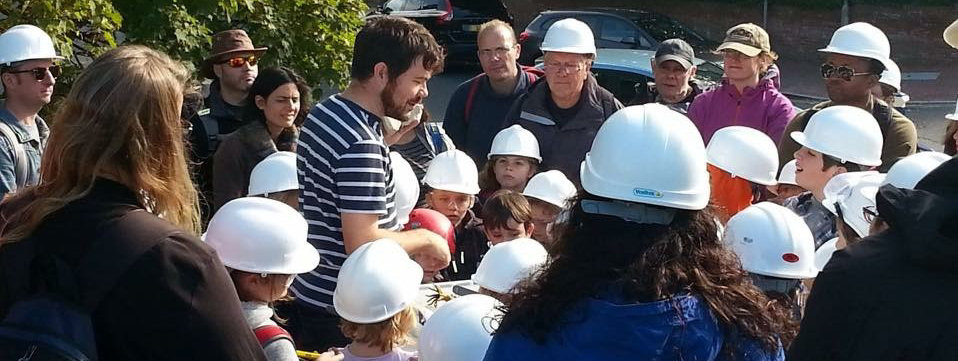
Discovering Fossils guided fossil hunts reveal evidence of life that existed millions of years ago. Whether it’s your first time fossil hunting or you’re looking to expand your subject knowledge, our fossil hunts provide an enjoyable and educational experience for all. To find out more click here.
Page references: British Tertiary Stratigraphy, B.Daley and P.Balson; Elomeryx porcinus identified by Danielle Schreve at the NHM in London.