
Introduction
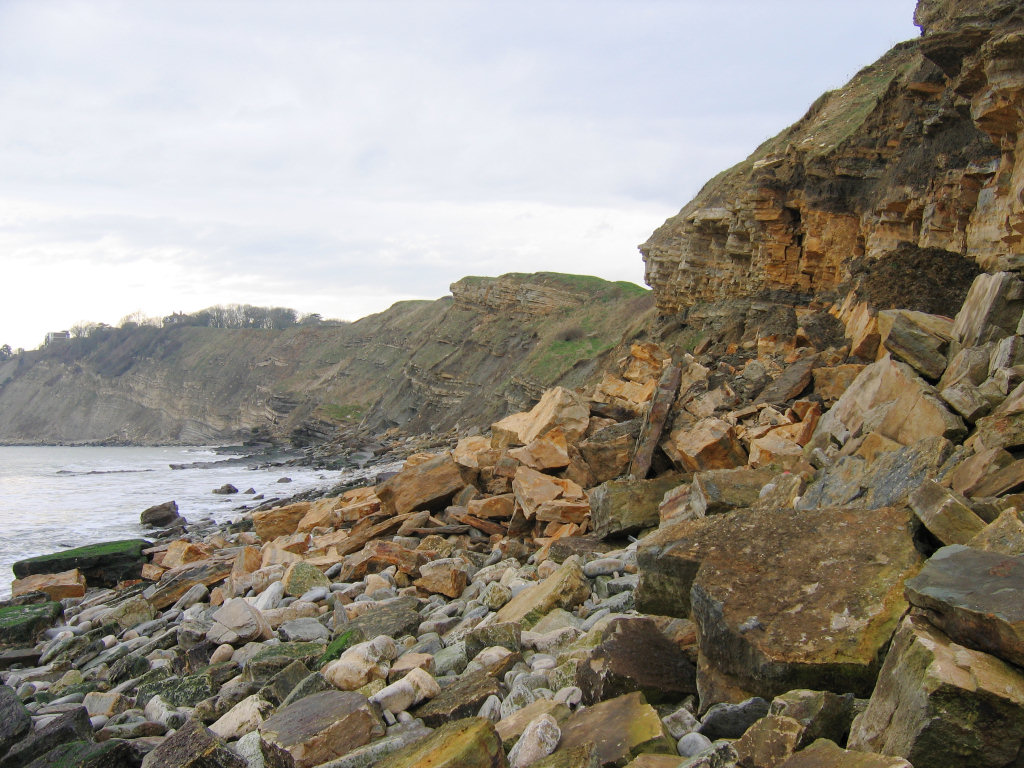
Durlston Bay is much less publicised for its fossils than many other locations along the Dorset coast, despite yielding some very good specimens over the years. Good finds are reliant on recent cliff falls, at which time visitors to the area can hope to find a range of fossils. It’s worth noting that this is not a family destination, aside from the heightened risk of cliff falls, the type and volume of fossils is more suited to experienced fossil hunters.
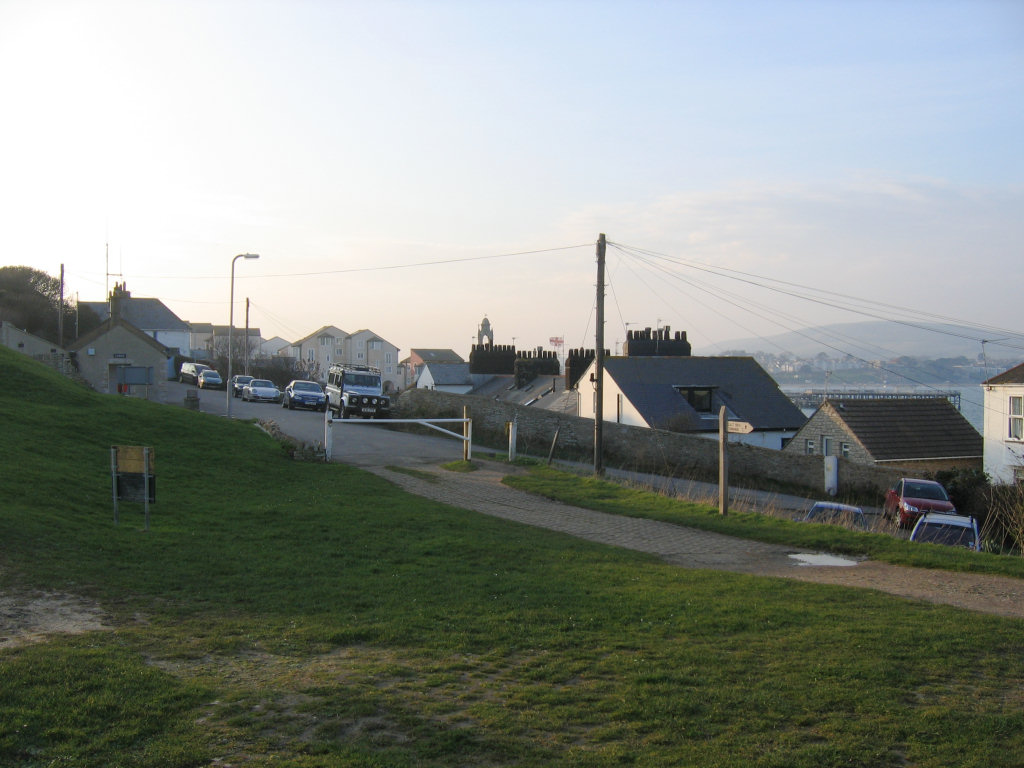 Above: Parking is available in the surrounding roads.
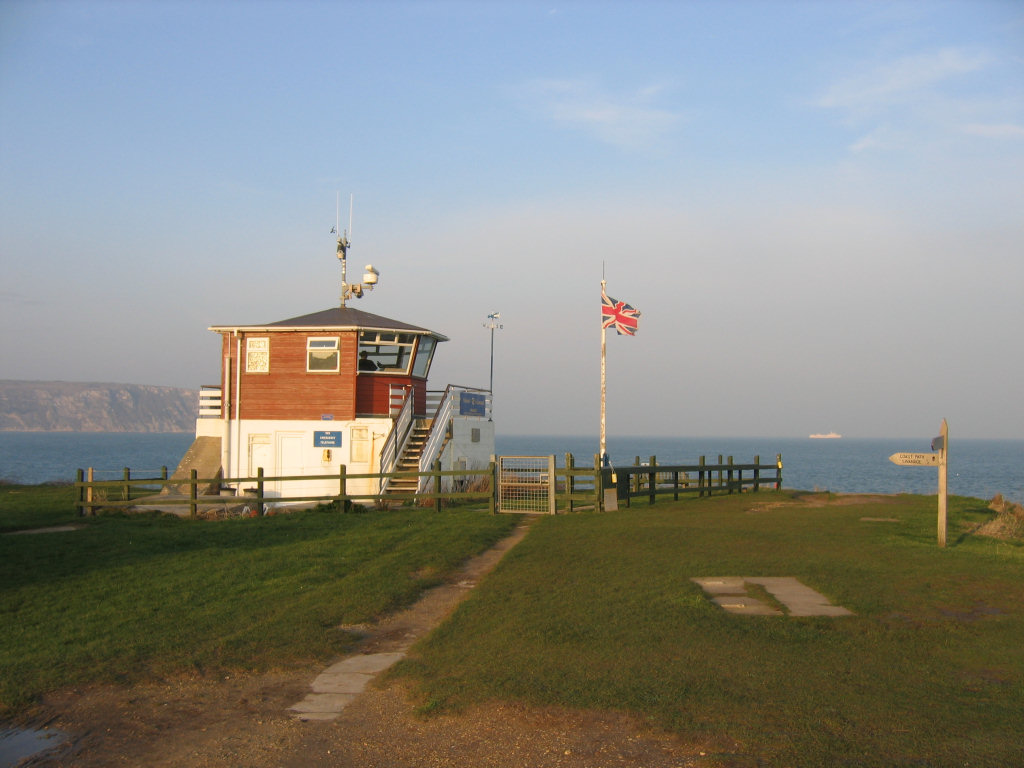 Above: Access to the beach is made beneath the Coast Guard tower.
Local roads on the hill-top provide plenty of parking and easy access to the coast. Follow the public footpath down the grassy hill until you reach the Coast Guard tower at Peveril Point, from here it’s possible to climb over the rocks to the foreshore.
The geology of Durlston Bay
Durlston Bay represents a transition between the Jurassic and the Cretaceous periods. During this time a large lagoon stretched along the coast; on the land were large numbers of dinosaurs and mammals, and in the shallow waters were crocodiles, sharks, fish and turtles. See Figure 1 below.
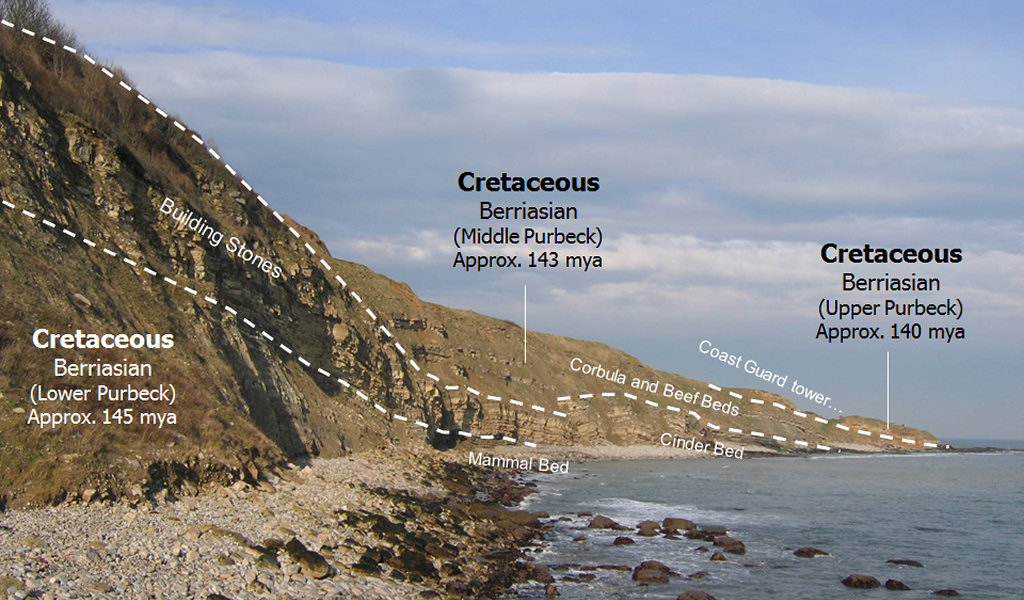 Figure 1: Detailed stratigraphy of Durlston Bay in 2007, adapted from Dr Ian West’s stratigraphic diagram www.soton.ac.uk.
The close proximity of the land and sea gave rise to brackish water (saltier than fresh water, but not as salty as seawater), this is evidenced by concentrations of the freshwater pond snail Viviparus, interspersed with the salt water mollusc Corbula. Much of this page is dedicated to the fossils found within the Upper Purbeck Beds, which date from approximately 140 million years ago.
Where to look for fossils?
Fossils can be found from the moment you step on to the beach and continue for several hundred metres to the south. Because many of the fossils are small it’s necessary to pay close attention to the rock surfaces for even the slightest sign of a fossil within.
During our recent visit a large portion of the cliff had collapsed only a few days earlier, depositing a large volume of fresh material on the beach; therefore it’s worth mentioning that the abundance portrayed by the following photos is not representative of the typical conditions.
 Above: A recent cliff collapse deposits fresh Upper Purbeck rock on the foreshore.
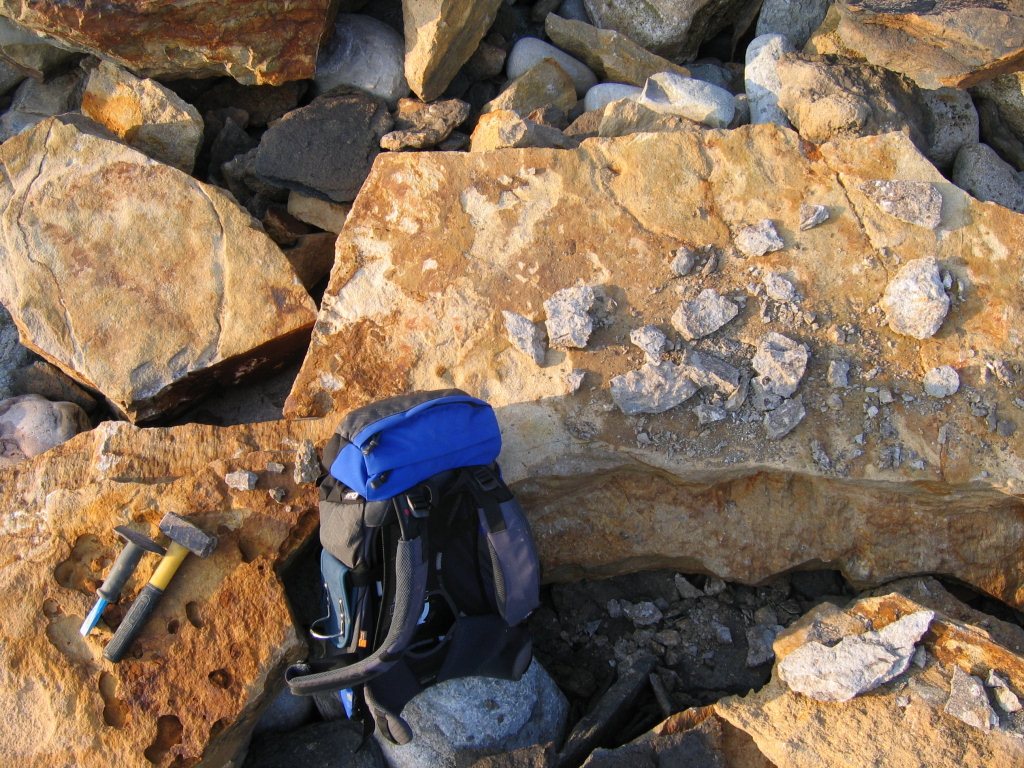 Above: Fragments of the Upper Purbeck Beds packed with fossils.
Occasionally fossil rich sections of the Upper Purbeck Beds are deposited on the beach, these are known to contain some truly excellent bones and teeth. Experienced fossil hunters will be able to identify these fragments by the concentration of small pieces of fossil wood, bones, shells etc. Breaking these rocks apart is a tough job, but persistence may pay off. Although this technique is recommended we suggest inexperienced visitors avoid hacking apart the foreshore sporadically!
On his website, Dr Ian West describes the Upper Purbeck as representing ‘…the marginal deposits of a lake with pond snails, freshwater bivalves and ostracods, where plant debris and remains of fish and crocodiles were washed into the shallow marginal areas.’ For further reading please visit Ian West’s website click here.
As with all coastal locations, a fossil hunting trip is best timed to coincide with a falling or low-tide. For a relatively low one-off cost we recommend the use of Neptune Tides software, which provides future tidal information around the UK. To download a copy click here. Alternatively a free short range forecast covering the next 7 days is available on the BBC website click here.
What fossils might you find?
The most commonly found fossils are teeth belonging to fish and crocodiles, although the latter are significantly less abundant. Other finds include bivalves, fragments of turtle carapace, crocodile scutes and isolated fish bones.
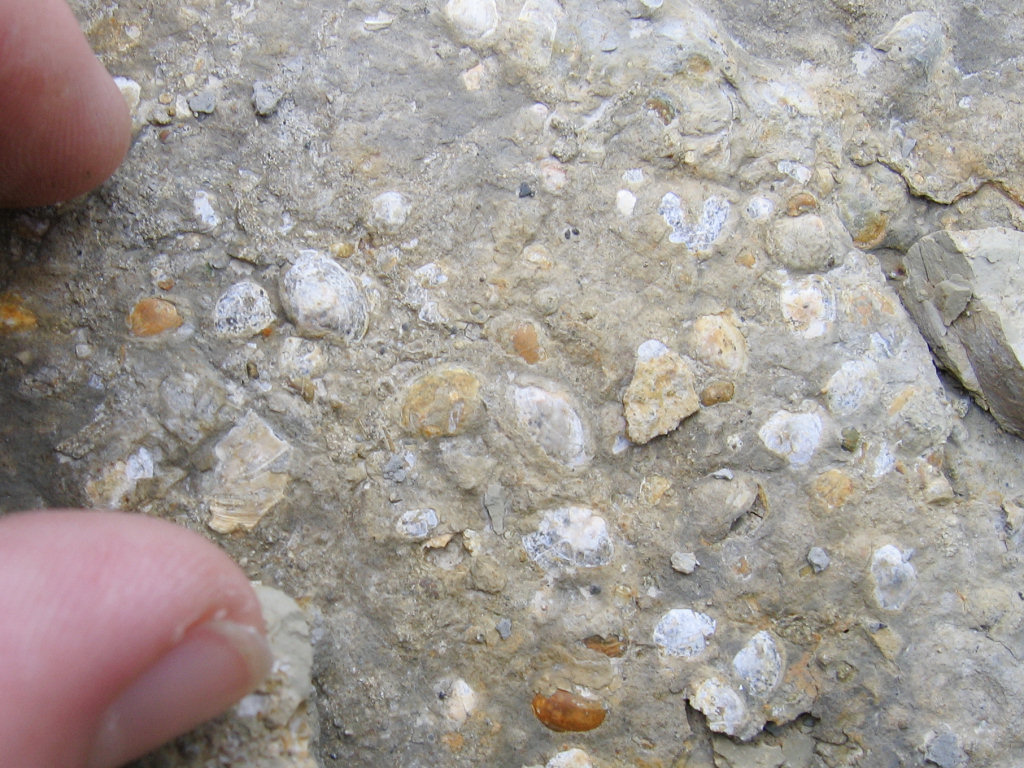 Above: A concentration of small bivalves.
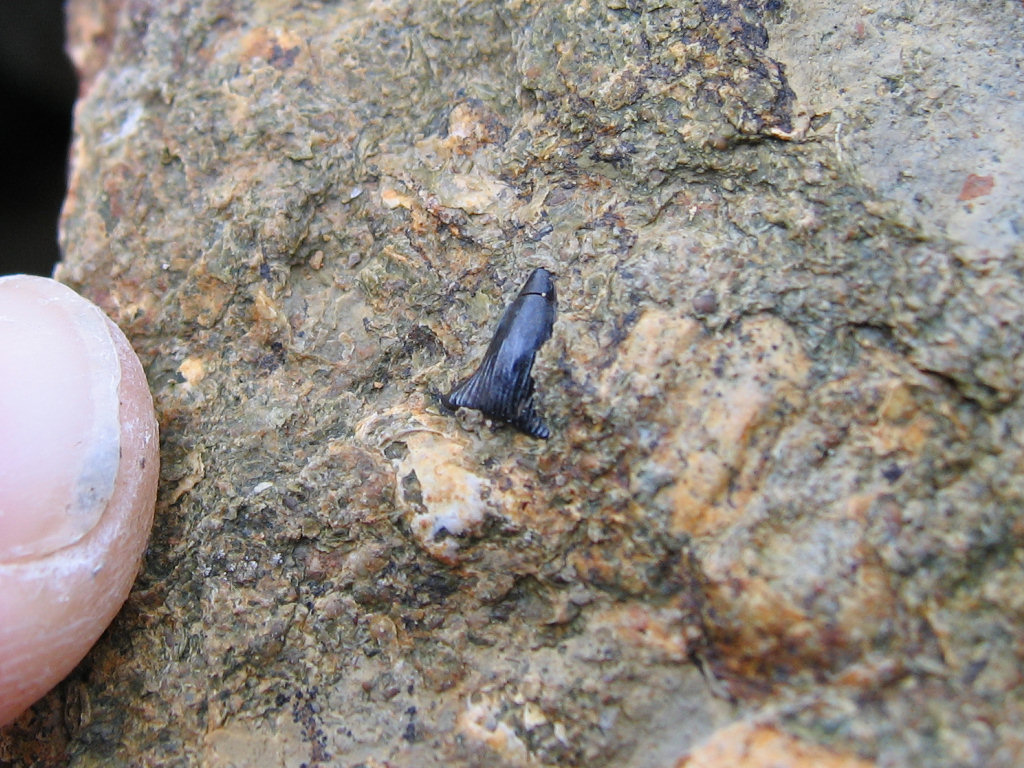 Above: A small Hybodus(?) shark tooth.
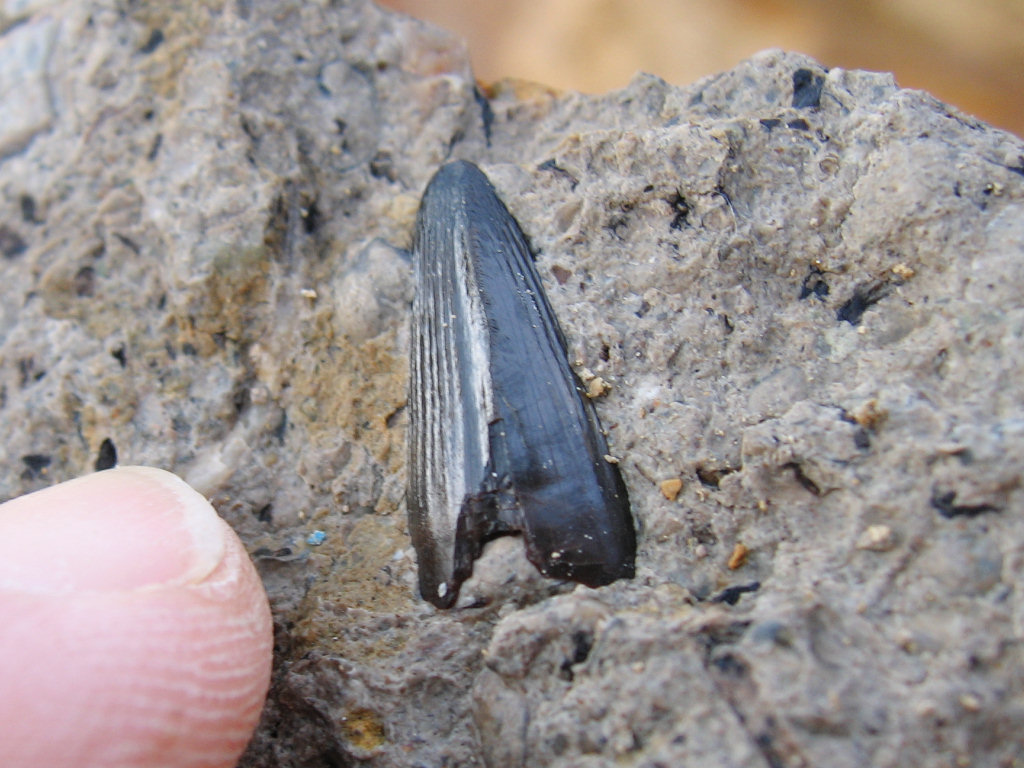 Above: A splendid Goniopholis(?) crocodile tooth from the Upper Purbeck Beds.
 Above: A partly damaged root of a Goniopholis(?) crocodile tooth from the Upper Purbeck Beds.
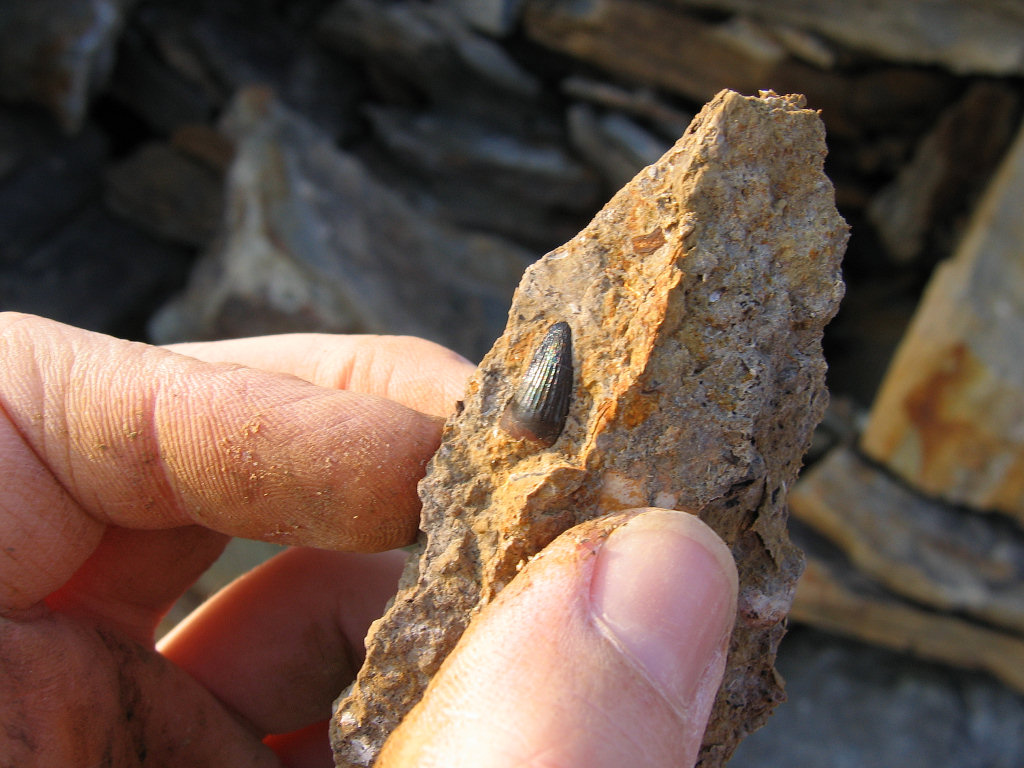 Above: A Goniopholis(?) crocodile tooth from the Upper Purbeck Beds.
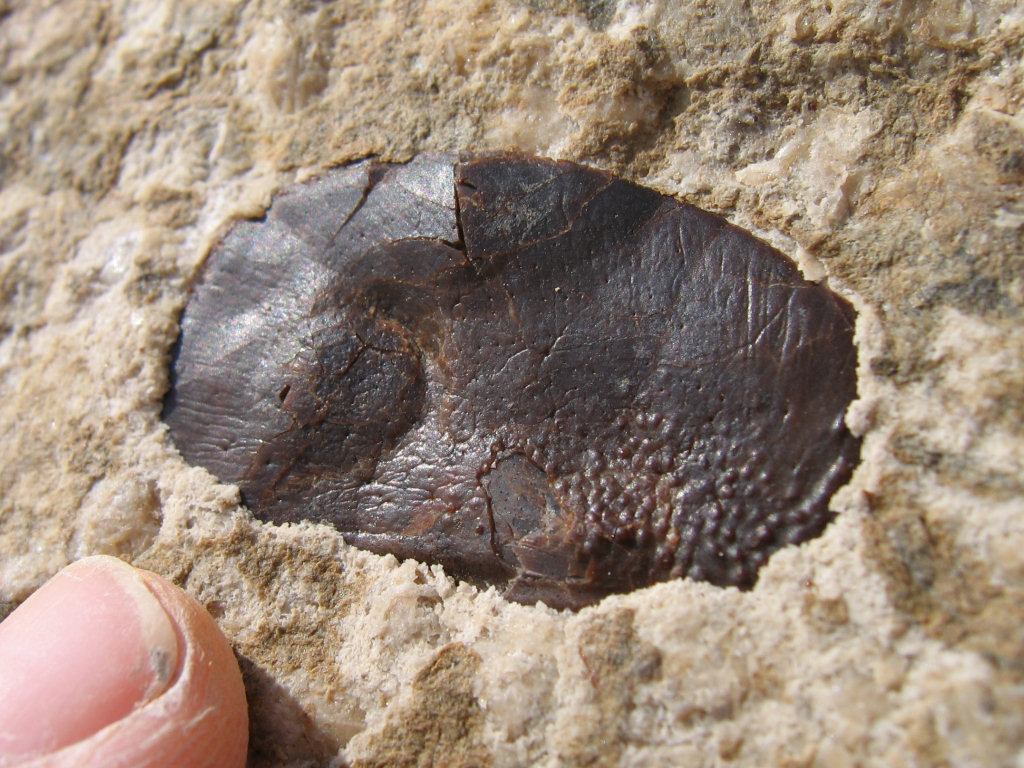 Above: A fragment of turtle shell.
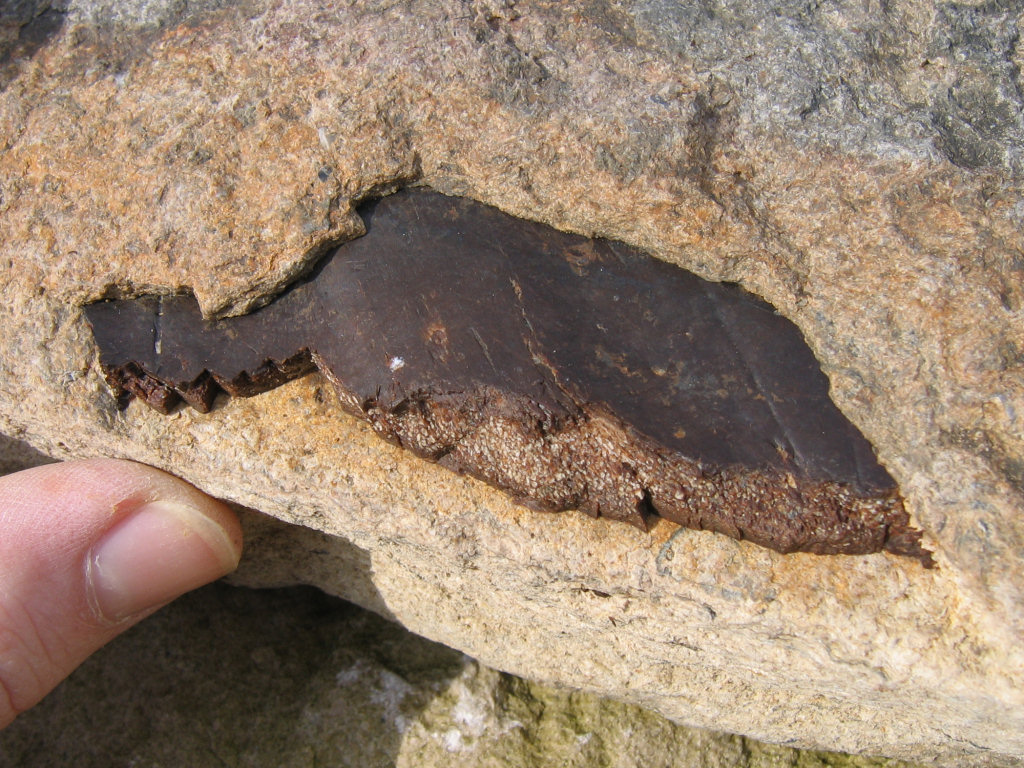 Above: A large fragment of turtle carapace.
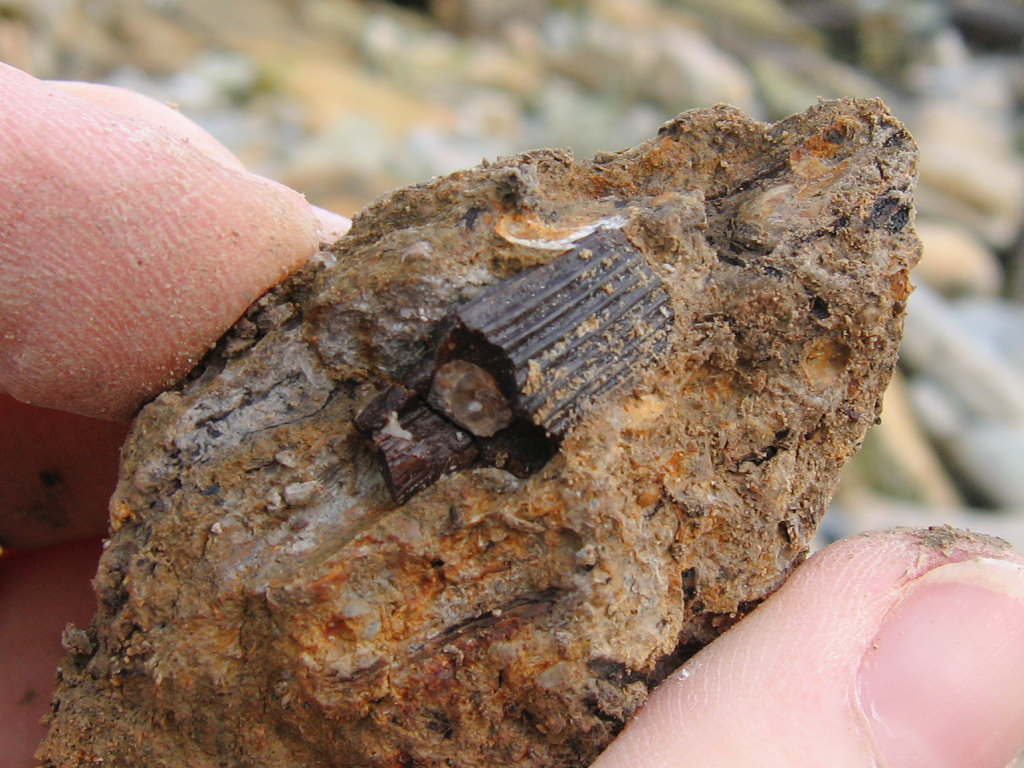 Above: A fragment of a Hybodus shark fin-spine.
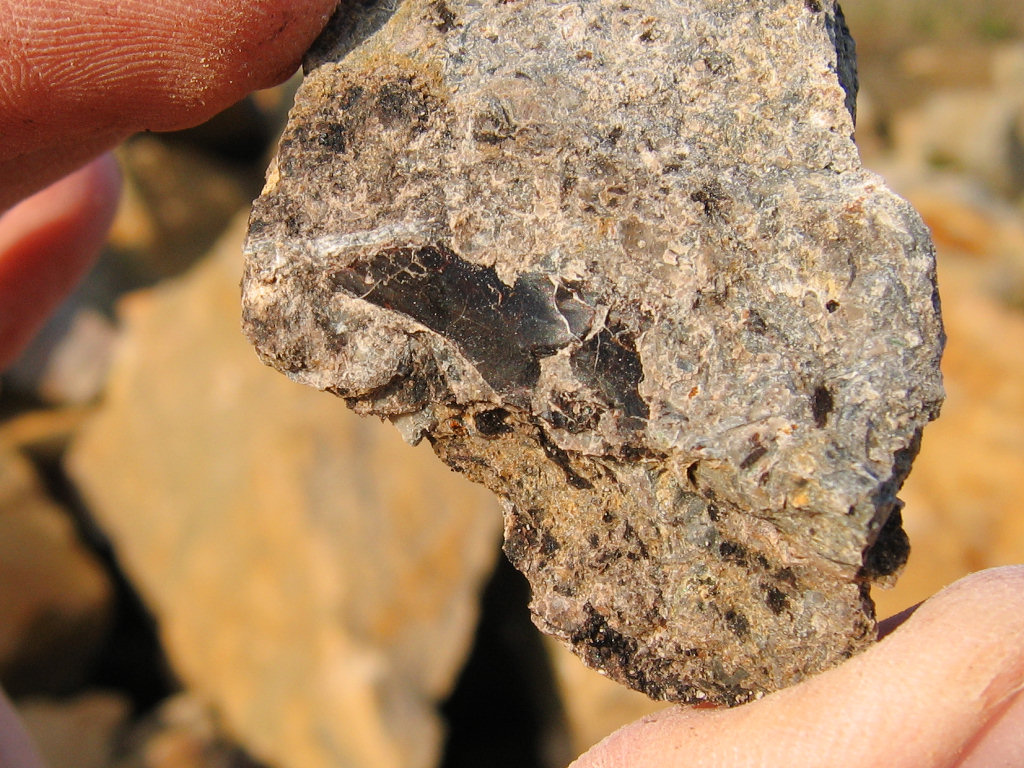 Above: An isolated fish skull bone.
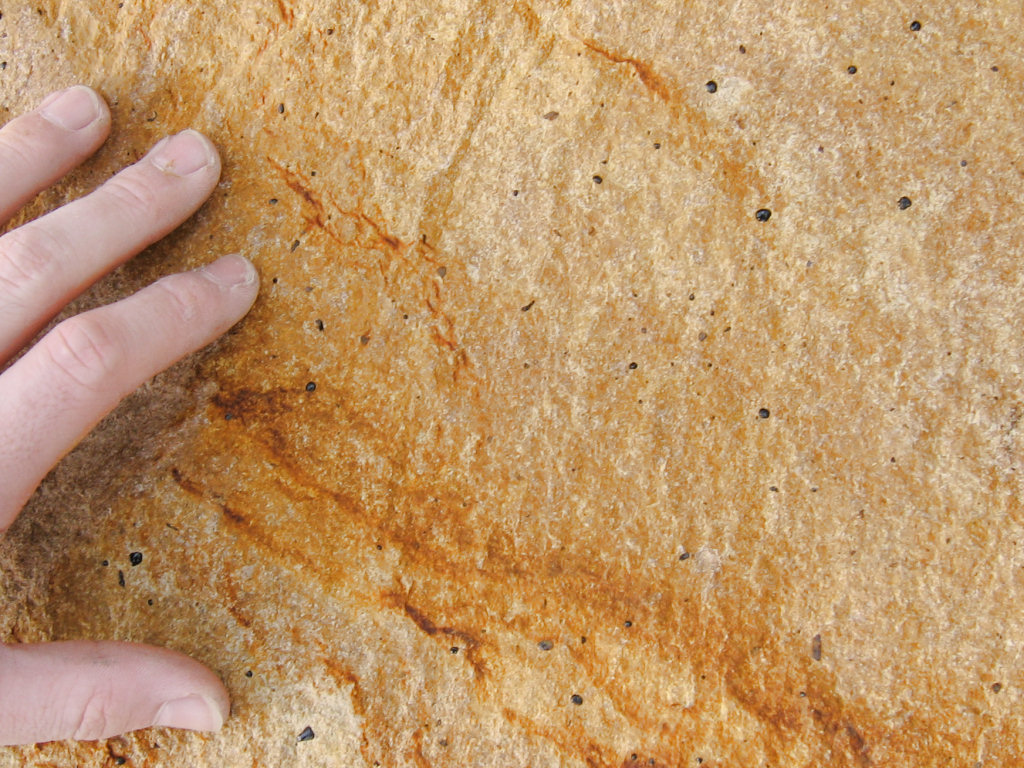 Above: A boulder surface containing dozens of fish teeth, many of which belong to Lepidotes. See close-up below.
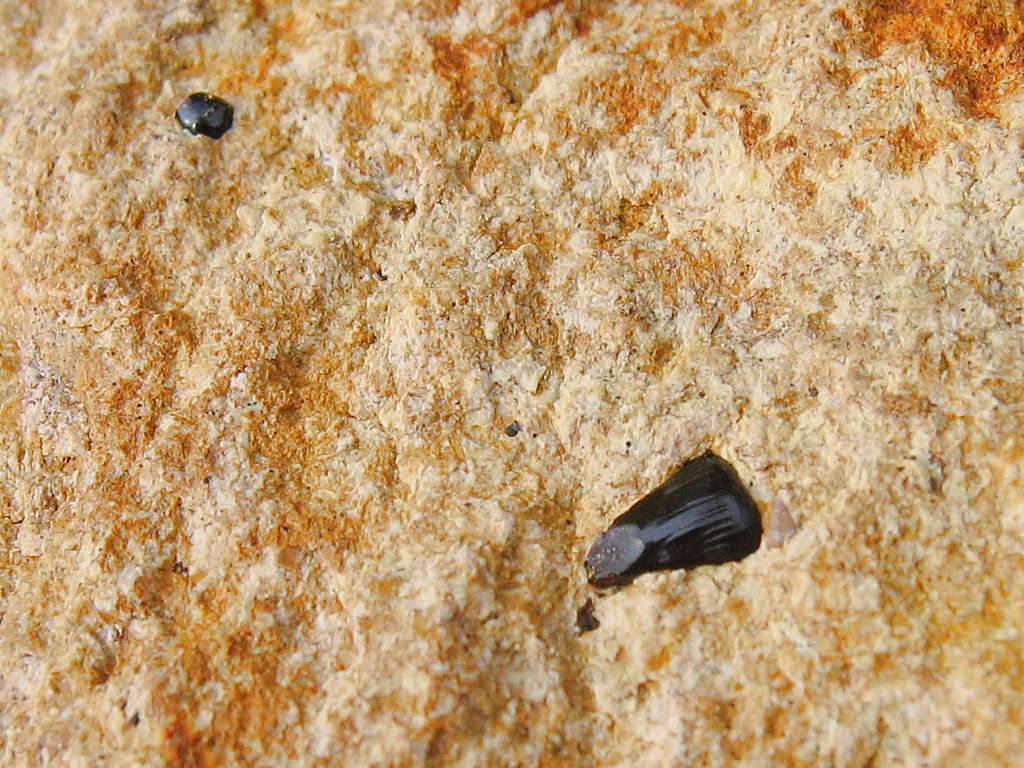 Above: A close-up of the fish teeth as shown previously above. The prominent specimen is thought to belong to a species other than Lepidotes.
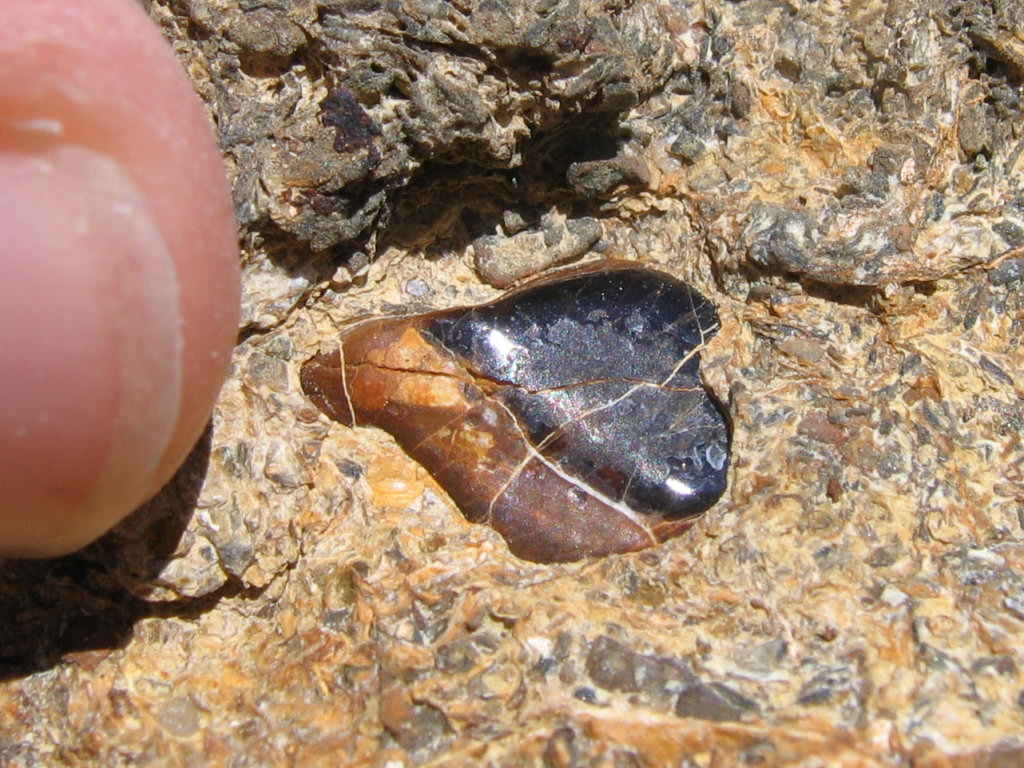 Above: An isolated Lepidotes fish scale.
Tools & equipment
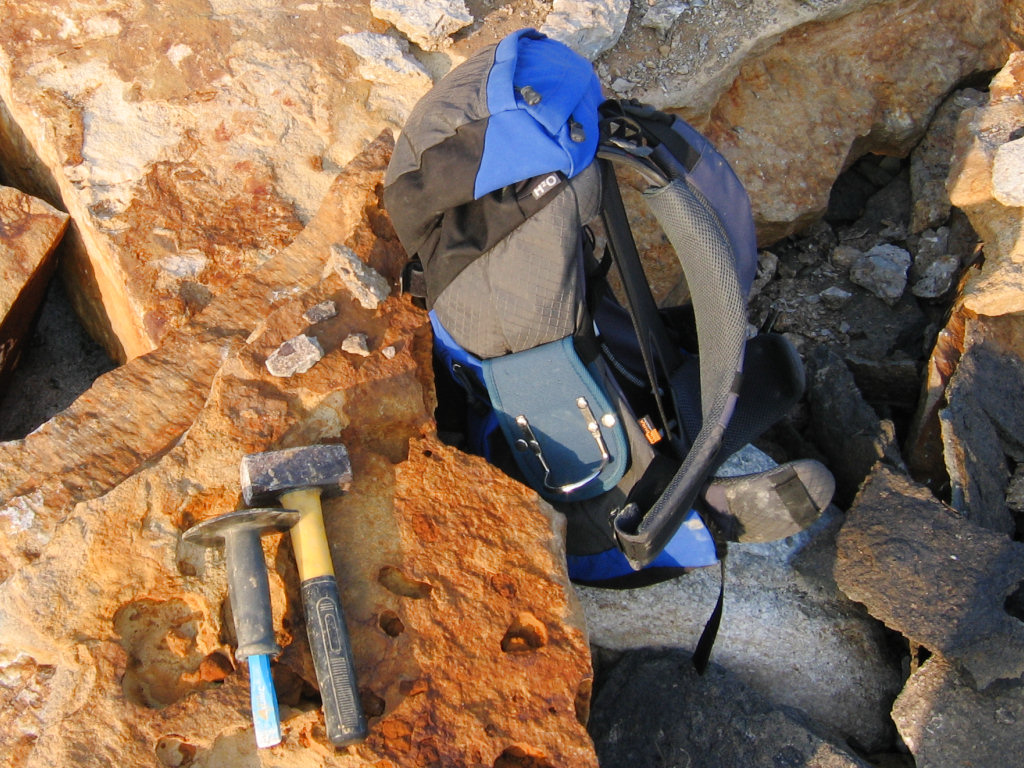 Above: A hammer, chisel and strong bag are essential for fossil hunting.
It’s a good idea to spend some time considering the tools and equipment you’re likely to require while fossil hunting at Durlston Bay. Preparation in advance will help ensure your visit is productive and safe. Below are some of the items you should consider carrying with you. You can purchase a selection of geological tools and equipment online from UKGE.
Hammer: A strong hammer will be required to split prospective rocks. The hammer should be as heavy as can be easily managed without causing strain to the user. For individuals with less physical strength and children (in particular) we recommend a head weight no more than 500g.
Chisel: A chisel is required in conjunction with a hammer for removing fossils from the rock. In most instances a large chisel should be used for completing the bulk of the work, while a smaller, more precise chisel should be used for finer work. A chisel founded from cold steel is recommended as this metal is especially engineered for hard materials.
Safety glasses: While hammering rocks there’s a risk of injury from rock splinters unless the necessary eye protection is worn. Safety glasses ensure any splinters are deflected away from the eyes. Eye protection should also be worn by spectators as splinters can travel several metres from their origin.
Strong bag: When considering the type of bag to use it’s worth setting aside one that will only be used for fossil hunting, rocks are usually dusty or muddy and will make a mess of anything they come in contact with. The bag will also need to carry a range of accessories which need to be easily accessible. Among the features recommended include: brightly coloured, a strong holder construction, back support, strong straps, plenty of easily accessible pockets and a rain cover.
Walking boots: A good pair of walking boots will protect you from ankle sprains, provide more grip on slippery surfaces and keep you dry in wet conditions. During your fossil hunt you’re likely to encounter a variety of terrains so footwear needs to be designed for a range of conditions.
For more information and examples of tools and equipment recommended for fossil hunting click here or shop online at UKGE.
Protecting your finds
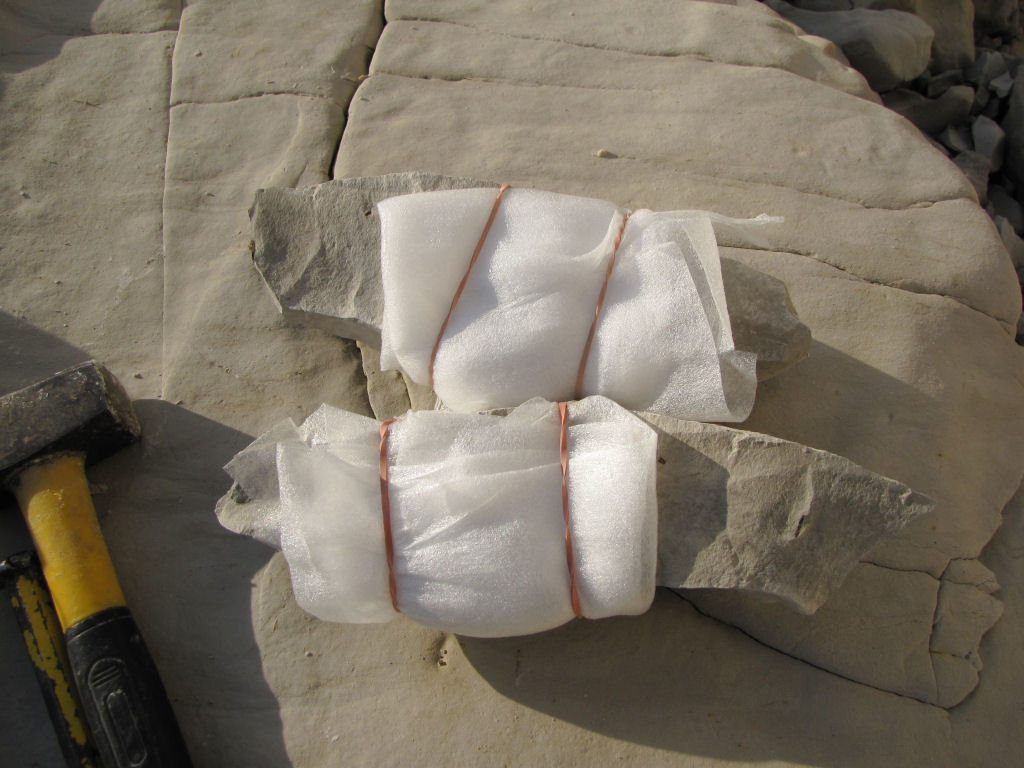
It’s important to spend some time considering the best way to protect your finds onsite, in transit, on display and in storage. Prior to your visit, consider the equipment and accessories you’re likely to need, as these will differ depending on the type of rock, terrain and prevailing weather conditions.
When you discover a fossil, examine the surrounding matrix (rock) and consider how best to remove the specimen without breaking it; patience and consideration are key. The aim of extraction is to remove the specimen with some of the matrix attached, as this will provide added protection during transit and future handling; sometimes breaks are unavoidable, but with care you should be able to extract most specimens intact. In the event of breakage, carefully gather all the pieces together, as in most cases repairs can be made at a later time.
For more information about collecting fossils please refer to the following online guides: Fossil Hunting and Conserving Prehistoric Evidence.
Join us on a fossil hunt
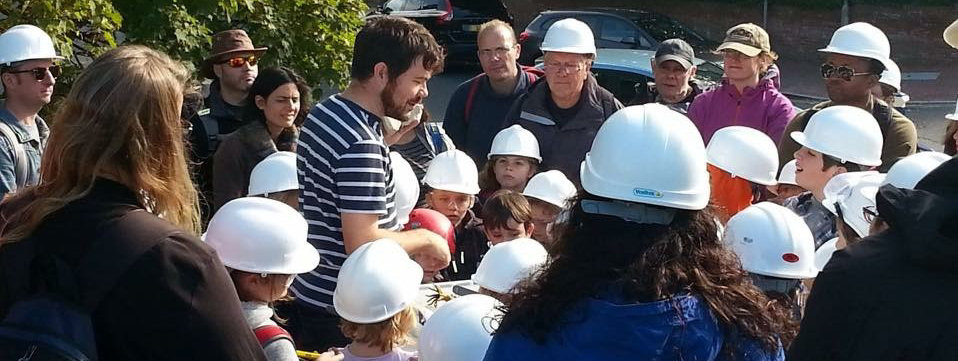
Discovering Fossils guided fossil hunts reveal evidence of life that existed millions of years ago. Whether it’s your first time fossil hunting or you’re looking to expand your subject knowledge, our fossil hunts provide an enjoyable and educational experience for all. To find out more click here.
Page references: British Regional Geology – The Hampshire Basin and adjoining areas, 4th edition; Dr Ian West – http://www.soton.ac.uk/~imw/durlston.htm.